


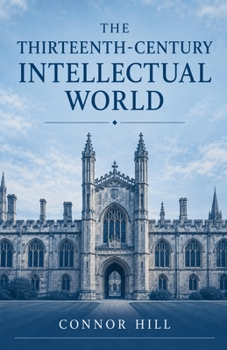
The Thirteenth-Century Intellectual World

The thirteenth century occupies a singular place in the history of human thought. Few periods before the modern age witnessed such a concentration of intellectual energy, institutional innovation, and cultural exchange. Across the cities, monasteries, courts, universities, and religious houses of Europe, new forms of inquiry transformed the understanding of nature, society, government, and God. Ancient authorities were rediscovered and interrogated; new educational structures emerged to train generations of scholars; translations from Arabic and Greek opened vast intellectual horizons; and learned men and women sought to reconcile inherited traditions with unprecedented bodies of knowledge. The result was not merely an accumulation of learning but the construction of an intellectual world whose influence would endure for centuries.
Customer Reviews
ThriftBooks ® and the ThriftBooks ® logo are registered trademarks of Thrift Books Global, LLC
