


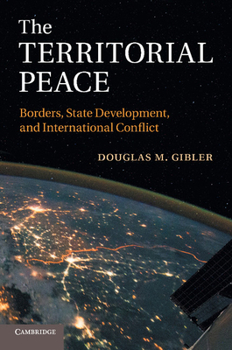
The Territorial Peace: Borders, State Development, and International Conflict
No Customer Reviews

Select Format
Select Condition 
Book Overview
There is continued discussion in international relations surrounding the existence (or not) of the 'democratic peace' - the idea that democracies do not fight each other. This book argues that threats to homeland territories force centralization within the state, for three reasons. First, territorial threats are highly salient to individuals and leaders must respond by promoting the security of the state. Second, threatened territories must be defended by large, standing land armies and these armies can then be used as forces for repression during times of peace. Finally, domestic political bargaining is dramatically altered during times of territorial threat; with government opponents joining the leader in promoting the security of the state. Leaders therefore have a favorable environment in which to institutionalize greater executive power. These forces explain why conflicts are associated with centralized states and in turn why peace is associated with democracy.
Format:Paperback
Language:English
ISBN:1107437245
ISBN13:9781107437241
Release Date:August 2014
Publisher:Cambridge University Press
Length:204 Pages
Weight:0.62 lbs.
Dimensions:0.4" x 6.0" x 9.0"
Customer Reviews
0 rating
Copyright © 2026 Thriftbooks.com Terms of Use
| Privacy Policy | Do Not
Sell/Share My Personal Information | Cookie Policy | Cookie Preferences | Accessibility Statement
ThriftBooks® and the ThriftBooks® logo are registered trademarks of Thrift Books Global, LLC
ThriftBooks® and the ThriftBooks® logo are registered trademarks of Thrift Books Global, LLC
