


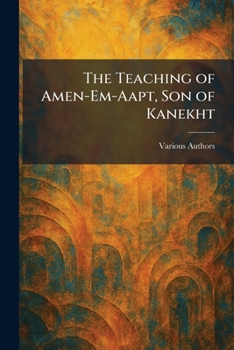
The Teaching of Amen-Em-Aapt, Son of Kanekht

"The Teaching of Amen-Em-Aapt, Son of Kanekht" is a profound example of ancient Egyptian wisdom literature, offering a window into the moral and ethical framework of the New Kingdom. Traditionally attributed to the scribe Amenemope, this instructional text provides timeless guidance on how to navigate the complexities of life through humility, honesty, and inner peace.
The work is structured as a series of chapters or "houses," each containing practical and spiritual advice intended to lead the reader toward a life of Maat, or cosmic balance. From warnings against greed and social climbing to calls for compassion toward the poor and vulnerable, "The Teaching of Amen-Em-Aapt, Son of Kanekht" reflects a sophisticated understanding of human nature and social responsibility.
Long recognized by scholars for its significant parallels with biblical literature, particularly the Book of Proverbs, this text remains an essential resource for those interested in Egyptology, comparative religion, and the history of ethical thought. It stands as a testament to the enduring human quest for wisdom and a righteous life.
This work has been selected by scholars as being culturally important, and is part of the knowledge base of civilization as we know it. This work was reproduced from the original artifact, and remains as true to the original work as possible. Therefore, you may see the original copyright references, library stamps (as most of these works have been housed in our most important libraries around the world), and other notations in the work.
This work is in the public domain in the United States of America, and possibly other nations. Within the United States, you may freely copy and distribute this work, as no entity (individual or corporate) has a copyright on the body of the work.
As a reproduction of a historical artifact, this work may contain missing or blurred pages, poor pictures, errant marks, etc. Scholars believe, and we concur, that this work is important enough to be preserved, reproduced, and made generally available to the public. We appreciate your support of the preservation process, and thank you for being an important part of keeping this knowledge alive and relevant.
Customer Reviews
ThriftBooks ® and the ThriftBooks ® logo are registered trademarks of Thrift Books Global, LLC
