
Skip to content
Scan a barcode
Scan
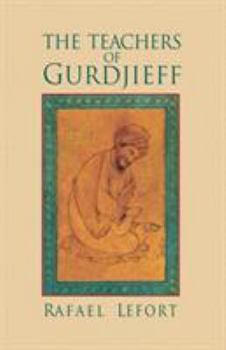
Paperback The Teachers of Gurdjieff Book

ISBN: 1883536162

ISBN13: 9781883536169

The Teachers of Gurdjieff

Select Format

Select Condition ThriftBooks Help Icon

Recommended

Format: Paperback

Condition: New

$13.93
Save $2.06!
List Price $15.99
Ships within 2-3 days
Save to List

Book Overview

When The Teachers of Gurdjieff was first published more than 50 years ago, it made a considerable stir. George Ivanovich Gurdjieff had been one of the most famous mystics in the West in the first half of the 20th century - a teaching master who had many fashionable and influential pupils. He had a striking appearance and manner of teaching, and his teaching proved to be very influential. But the meaning of his teaching and the sources of it were a puzzle. How did he come by his knowledge? What was to become of it? These were questions that engaged many seekers. This book offers - among the adventures of the search, which takes the reader through such places as the souks of Baghdad and Aleppo - striking and timeless advice to those interested in finding spirituality. Its appeal is far beyond that of one seeker in one era, but offers us information, today, on how to evaluate different forms of teaching, how to study, and even some tantalizing information on the role of Jesus.

Customer Reviews

5 ratings

"A real effort" is missing an "L"

Most references to this book describe the name Rafael Lefort as being an anagram for: "A real effort" Apparently everyone is happy to repeat this little nugget of information, but no one bothered to check and see if it was actually accurate. It is wrong, wrong, wrong, and it only takes 30 seconds to figure that out if you use a little of the "attention" that the Fourth Way espouses. ALWAYS DOUBLE-CHECK YOUR ANECDOTAL INFORMATION!!! ...as it turns out I have it on VERY good authority that it is actually an anagram for "fetal or feral", an obvious reference to the concept of Ontogeny recapitulating phylogeny or maybe it was "raft all or fee"...a clear warning against neglecting Mahayana buddism (the big raft) due to the risk of karmic debt .... But the book... Well. It's a good book. I don't know who wrote it. Maybe Idries Shah, or his brother, or J.G. Bennett before he gave Coomes Farm to Mr. Shah, (interested parties should also read Bennett's 'Journeys in Islamic Countries') or maybe somone else. Regardless, I have some experienge working in both a "Gurdjieff Work" group, and a Chishti sufi circle, and from my assesment the points that the book makes are pretty much dead on.(Though I may be totally wrong here...I'm not an initiated member in either of the two groups) The fact of the matter is that Gurdjieff never successfully passed on his baraka. None of his students were up to the task. The Work was hopelessly fragmented after his death for that reason. It's a worthwhile read for those interested in Sufiism and for those interested in Gurdjieff (though I wouldn't ascribe factual legitmacy to the story). William Patterson's book "The Struggle of the Magicians" provides some intersting insights into G.'s efforts to train a successor, and would probably serve as good supplemental reading to this book.

Excellent Book, very beneficial!

This is a very good book for those people who are interested in the teachings of Gurdjieff. It is a story about a young man from Paris who is studying in a Gurdjieff group. After being in the group and realizing that he is making little progress and that some of the group's main principles contradict much of what Gurdjieff himself taught, he becomes disillusioned. Selling everything he decides to travel to the Middle East in order to find the men who taught Gurdjieff. After interchanges with fellow pupils and teachers of Gurdjieff (some very old) he begins to realize that what Gurdjieff learned was transmitted to him by certain people, in a certain form, at a certain time and for a specific purpose. He learns that the same thing Gurdjieff learned cannot be transmitted to him in the same way because he is a different man, in a different time and from a different culture. As his search continues he realizes that what he began searching for is not necessarily what he needs and what he needs is not necessarily what he wants. A very interesting, funny and illuminating book for the reader who can set aside his assumptions about Gurdjieff.For those who do care, Gurdjieff did study in Sufi orders. However, this book is not as specific in giving all of the details about when, where, what and with whom that Gurdjieff studied, but there are plenty of other facts in other books that do tell. For instance, all of the following longstanding Sufi physical and mental exercises were employed by Gurdjieff: the Sufi Quiff or "stop" exercise(see In Search of the Miraculous by PD Ouspensky & see The Sufis by Idries Shah or Among the Dervishes by OM Burke), the heart to heart method of teaching or "the talk of angels" -- a form of instruction where the teacher's voice speaks inside the disciple's chest (see In Search of... and Shah's "Dermis Probe"), eastern hypnosis combined with a breathing exercise used to cure physical illnesses ---Gurdjieff used this to cure cancer, alcoholism and smoking, this technique came from the prophet, is referenced in the Koran and has been used by Sufi doctors since (see In Search of the Miraculous by PD Ouspenksy and The World of the Sufis edited by Idries Shah), the enneagram or nine angle figure is a symbol that has been used in the Sarmoun Brotherhood and by Sufis of all orders for a very long time (see In Search of the Miraculous, Gurdjieff's Meetings with Remarkable Men, Idries Shah's Commanding Self and OM Burke's Among the Dervishes), the wisdoms of the Sufi teaching master Mullah Nasrudin are used repeatedly by Gurdjieff in his opus Beelzebub's Tales To His Grandson (see Beelzebub's and Idries Shah's the Adventures of Mullah Nasrudin '3 books of tales'), the teaching that man is asleep and a machine is a very eastern, particularly Sufi concept to be found in almost all Sufi books in one form or another (see In Search of the Miraculous by PD Ouspensky and Hakim Sanai's The Walled Garden of Truth and Idries Shah's "The Sufis",

Just think about it....

This is an excellent book for anyone who has entered into the "Gurdjieff Work" or a P.D. Ouspensky "Fourth Way" group and is disillusioned. The title is ciphered in the standard Sufic format, the auhor's name Rafael Lefort is an encryption for "A Real Effort". That Gurdjieff studied with Sufi teachers in the East is no great secret. This has been commonly documented in his own numerous references to dervishes and Sufi schools in "Meetings With Remarkable Men". The Sarmoun Brotherhood itself, is a Sufi stronghold in Afghanistan (or still was in 1970, see Burke's "Among The Dervishes") near the Oxus river. The main symbol of the brotherhood was the nine-angled enneagon that Gurdjieff employed, which the school referred to as The Impress. Furthermore, though students and "teachers" involved in the current Gurdjieff work are unable to decipher it, "Beelzebub's Tales To His Grandson" is practically filled from page to page with Sufi technical terms and teachings. He even quotes the great Sufi Master Mullah Nasruddin throughout the entire work. The introduction to Beelzebub's entitled "the arousal of thought" has the Nasruddin tale "Eating My Money" in it (see Idries Shah, "The Pleasantries of Mullah Nasruddin). Many of Ouspensky's followers today still do not have any idea that the name of their system they acquired from Gurdjieff, The Fourth Way, has been the name of The Naqshbandi Order of Sufis for over 700 years at least.Before I wrote this review I read some of the reviews here in order to see if I could add anything that had not been covered. In doing so, I found a cluster of people (mostly Gurdjieff followers it seems) who hated this book with a passion. It is not hard to see why, since it says that all legitiment teachings die with the teacher and that another teacher "who knows" has to be found in order for any understanding, learning or development to take place. The main objective of this book is to make this point clear. That learning has to follow the dictum "time, place and certain people". People who are reading it for anthropological or historical information will only receive small puzzles to a vague mystery of the details about exactly what, when and how Gurdjieff studied. This has angered people who want "proof" that Gurdjieff studied with dervishes and which ones, but it is the exact same thing Gurdjieff would have done--most of his works were allegorical to inhibit automemtic thinking.I encountered this book shortly after I had pursued studies in Gurdjieff work groups and it was a blessing. I was disillusioned in the work groups because I realized that something was missing......GURDJIEFF! I was asking questions to people who didn't know the answers, only thought they knew or who quoted Gurdjieff as an answer. I was involved in a masquerade of charlatanism! As the author of this book says, (not verbatim) "what a fate for a teaching, that constantly reiterated the dangers of automatic thinking and indoctrination, to be left with no

This book is extraordinary!

If you are reading this review and its towards the end of a long string of them then you will probably feel somewhat like I did. Exhausted. I could not believe that people interested in the work of a great mystic like Gurdjieff could possibly be so narrow minded and also try to rage a "computer war" against Idries Shah (who I only knew of by name before reading here). Anyway, the purpose of this review is to do just that - provide a subjective opinion on my feelings of the book, which is just what I will do.I started reading Ouspensky & then Gurdjieff. I have spoken to many people engaged in the Gurdjieff Foundation as it is called and was getting ready to check out a meeting - though all the while I was somewhat hesitant. Many things distressed me about my conversations with the Gurdjieffians I had spoke to. I thought, how could anything "secret" and "difficult" be so easy to find? And once found, taught by people who are of no higher a level of understanding than myself? Ceretaintly a room full of pupils with no masters is far worse than a room full of people who aren't searching at all. In other words the blind leading the blind, will get no one anywhere. This cannot be productive I thought. I still didn't know where to turn. What should I do? Go to find the teachers of Gurdjieff in the way off East? This I had finally decided to do, and then a miracle happened, The Teacher's Of Gurdjieff fell into my hands. When I came across this book I was in my second reading of Gurdjieff's All & Everything. I enjoyed reading the books, even the second time around, but all the while I felt that I could only understand them on a surface level and could not penetrate their deep allegory. I felt somewhat confused, was this my shortcomings? Certaitnly it wasn't that of a great mystic like Gurdjieff? These questions's all boggled me until I discovered this book. What a relief! It answered all my questions and more. I have read it four times, and would recommened it to any seeker, not just Gurdjieffians. I will now search for the living tradition as it is applied for today, and hopefully in my native country! My search may be long and hard, but many ?'s have been answered. And I personally don't care who wrote this book? Who would? Its contents are what are important. It is a fun fact that the name Rafael Lefort is a pseudonym for "A Real Effort" and after pondering it, while reading, it did make more sense that it would have been written by a great teacher or master. Either way, its a great book and not hard to read at all.A last note. I can understand someone not knowing that this book existed and going into the monotonious Gurdjieff work at the "foundation" as they call it, but its beyond my understanding how anyone who has read Gurdjieff and grasped 1/10 of his message could have discovered this book and not been infintley greatful. I will end this ramble and quote a speech for Gurdjieff's lecture in Essentuki in 1918 that might be of some use to the rea

A Welcome Signpost

This book is obviously a fable and uses the same allegorical format that Gurdjieff employed in his works. The pseudonym Rafael Lefort, an anagram for "A REAL EFFORT", is quite obvious and further points clearly to this. Those who dismiss fables and their message because "fables aren't true" miss the point entirely. Readers, disappointed by not finding information and factual data on Gurdjieff's teachers in this book, are prevented from benefiting from the book's central message. Likewise, "4th way" followers, attached to their system, feel threatened by the author's basic asserion -- that the teaching of Gurdjieff was limited and had at best temporary value for real development. I read this book more than 25 years ago at a time when I was immersed in the books of Gurdjieff and Ouspensky. Unlike some reviewers' protests, the book, which never mentions Idries Shah, did not point me in that direciton whatsoever (I didn't discover that author until years later), so hardly a comercial for the man. The average reader wouldn't get this at all, and it is but the usual sort of claim perpetuated in 4th Way circles, despite Shah's practice of rejecting most applicants (including many Gurdjieffians). However, what this book did provide me at the time was a sensibility or counterbalance in assessing the Gurdjieff legacy. The tale simply reminds seekers to look elsewhere. In addition, the book is peppered with surprising observations -- from the underlying enneagon design of Baghdad to the analysis of such terms as "kundabuffer"-- which made the reading lively. Other insights and perspectives offered were part of the book's corrective impact, and I took the one-dimensional flavor of the book's characters and conversations as serving this overall function. Certainly, I wouldn't expect this or any work to "uncover" the missing "facts" of Gurdjieff's life and training when Gurdjieff himself avoided disclosing that and went out of his way to obscure many details. Yet some of his followers persist in trying to correlate dates or comb through biographies for inaccuracies, none of which is ultimately useful unless one is in the museum business. Whether or not Shah (or someone connected to him) wrote this needn't concern everybody not obsessed with conspiracy theories. I would recommend this book for those who can absorb a different perspective and who may welcome the reassurance that an intact Teaching survives and is accessible to those who can "empty the glass."
Copyright © 2026 Thriftbooks.com Terms of Use | Privacy Policy | Do Not Sell/Share My Personal Information | Cookie Policy | Cookie Preferences | Accessibility Statement
ThriftBooks® and the ThriftBooks® logo are registered trademarks of Thrift Books Global, LLC

GoDaddy Verified and Secured