
Skip to content
Scan a barcode
Scan
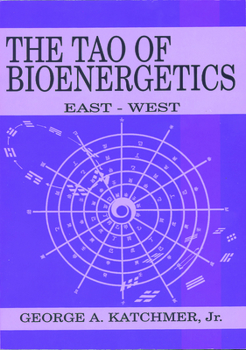
Paperback The Tao of Bioenergetics: East and West Book

ISBN: 0940871289

ISBN13: 9780940871281

The Tao of Bioenergetics: East and West

The Tao of Bioenergetics is the first comprehensive study of the use of Energetics as a scientific model (paradigm) in both western and eastern thought.

This book traces the history and uses of Qi (Chi), the bioenergy of China, from the I-Ching through physics, astrology, Feng Shui and alchemy.

The author demonstrates how the findings of the ancient Chinese Qigong masters were paralleled and confirmed in the early works of Hippocrates, Parclsus and Mesmer. He then shows the confirmation of Qigong theory in the modern clinical and experimental discoveries of Sigmund Freud, Carl Jung, Wilhelm Reich and Alexander Lowen. Also included are extensive excerpts from the published works of notable eastern scholars such as Yang, Ni, and Lu.

Special attention is given to the experiments of Wilhelm Reich to show the objectivity of the energy paradigm, and his experiments are quoted at length as scientific confirmation of eastern Qigong.

Finally, a synthesis is suggested and conclusions drawn for the future use of the broader energy paradigm in global science and human development.

Recommended

Format: Paperback

Condition: Very Good

$73.69
Almost Gone, Only 1 Left!
Save to List

Related Subjects

Philosophy

Customer Reviews

2 ratings

Entertaining cross-cultural overview of paradigms

Published at the height of Chi Kung fever (see Qigong Fever: Body, Science, and Utopia in China) by Yang Jwing-Ming's YMAA Press, this is a handy reference guide and east-west eye-opener to the idea of energy science, especially bio-energy. Chinese science is put forward as based on a movement and energy paradigm whereas Western science prefers a solid-object approach and a search for the 'true final answer' that the Chinese don't seek. In the years since conservation of energy was mooted in the west, Katchmer thinks, we have moved more and more towards an energetic point of view not only in physics but also in psychology. Cue much discussion of the energetic ideas of libido in Freud as they relate to Jung, with Reich (and a somewhat anticlimactic Alexander Lowen); these are compared with the Chinese approach which finds in Chi Kung an analogous idea that has been present for thousands of years. There are many ironies in such a viewpoint, which would not be possible if not for the impact western science has had in Communist China... but the cultural exchange here proves very productive in both directions. Katchmer is not without a big perspective and doesn't miss out such figures as Heraclitus or Paracelsus. What did surprise me, especially considering the author is a Buddhist, is that the Buddhist and Indian viewpoints are never tackled. The rather complete rundown of Chinese calendrics, Feng Shui, I Ching, etc., has nothing new for those already in the know but is a useful starting point for the neophyte. It considers Yang and Mantak Chia as the basics of good Chinese energy work; interestingly, although that 'Taoist energy work' field is a wider one now, what this book has to say about its basic nature and relevance remains accurate. Those of us who do Chi Kung of any kind will doubtless be struck, just as Katchmer is, by the fusing and integrated nature of the Chinese approach, which tends to make Western philosophy post-Descartes appear a bit of a wild goose chase. Katchmer's idea that motion proper entered western science with Newton and caused a gradual shift thereby definitely has something to it -- look at the coincidence with the apotheosis of contrapuntal intensity in Bach, Handel and Scarlatti that came at the same time: nothing is more magnificently in motion than that music. The bioenergetic approach is now in full swing in the West, and some of us have profited mightily from Chi Kung, although our science still doesn't 'get' bodily energy -- and it's now become harder to talk about in China too, since the Falungong crackdown. There are good western approaches everywhere, from Rubenfeld synergy to Heilkunst, and the movement in China still needs to be encouraged. so this remains an important book on this viewpoint. It's also a very entertaining and intelligent one.

The Tao of What?????

If you are new to the world of taoism then this book is NOT for you. It provides a fasinating insight into the Western and Eastern paradigms. Very revealing and exhausable; nearly every aspect is covered in comendable detail. But, and this is a big but, it is very complex and leaves you on more than one occassion feeling a little out of your depth. There are no exercises detailed to practise (that is not the point of the book) but lots of interesting parallels are drawn between the two schools of thought. If you are interested in the science of chi gong and/or what to write a paper for your University/college that will quite literally blow your teacher's mind then this is the book for you. I personally loved it, but I am not sure if it is to the general public's taste. However as you are reading this, then 'The Tao of bioenergetics' IS probarly for you - just don't be surprised if you end up reading each page at least twice! A brillant investment for the future!!
Copyright © 2026 Thriftbooks.com Terms of Use | Privacy Policy | Do Not Sell/Share My Personal Information | Cookie Policy | Cookie Preferences | Accessibility Statement
ThriftBooks® and the ThriftBooks® logo are registered trademarks of Thrift Books Global, LLC

GoDaddy Verified and Secured