


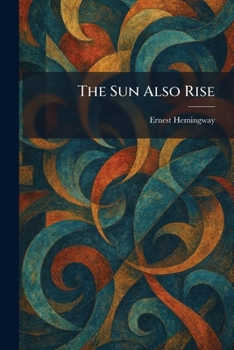
The Sun Also Rise

"The Sun Also Rises" is a quintessential masterpiece of modernist literature, capturing the profound disillusionment of the "Lost Generation" in the aftermath of World War I. The narrative follows Jake Barnes, an American journalist living in Paris, and a group of restless expatriates as they journey to Pamplona, Spain, for the festival of San Ferm -n. Central to the story is the complex and unattainable relationship between Jake and the magnetic Lady Brett Ashley, a bond deeply complicated by the physical and emotional scars of combat.
Hemingway's celebrated lean, objective prose explores themes of masculinity, resilience, and the search for meaning in a world where traditional values have been shattered. Against the backdrop of vibrant cafes in Paris and the visceral intensity of the Spanish bullring, the characters engage in a cycle of travel and social posturing to mask an internal void. As one of the most significant works of the 20th century, "The Sun Also Rises" remains a powerful exploration of the human condition, defining an era of literary transition and the enduring quest for authenticity in a fractured society.
This work has been selected by scholars as being culturally important, and is part of the knowledge base of civilization as we know it. This work was reproduced from the original artifact, and remains as true to the original work as possible. Therefore, you may see the original copyright references, library stamps (as most of these works have been housed in our most important libraries around the world), and other notations in the work.
This work is in the public domain in the United States of America, and possibly other nations. Within the United States, you may freely copy and distribute this work, as no entity (individual or corporate) has a copyright on the body of the work.
As a reproduction of a historical artifact, this work may contain missing or blurred pages, poor pictures, errant marks, etc. Scholars believe, and we concur, that this work is important enough to be preserved, reproduced, and made generally available to the public. We appreciate your support of the preservation process, and thank you for being an important part of keeping this knowledge alive and relevant.
Customer Reviews
ThriftBooks ® and the ThriftBooks ® logo are registered trademarks of Thrift Books Global, LLC
