


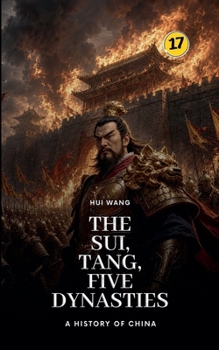
The Sui, Tang, Five Dynasties: A History of China

The An Lushan Rebellion had failed to destroy the Tang dynasty-but surviving the catastrophe created a new problem: who actually controlled the empire afterward?
The Sui, Tang, Five Dynasties: A History of China - Part Three follows the Tang dynasty from Emperor Daizong's accession in 762 CE through the increasingly unstable world of the late ninth century. Imperial rulers struggle with powerful eunuchs and increasingly autonomous jiedushi military governors, while figures such as Guo Ziyi, Emperor Dezong, Emperor Xianzong, Emperor Wuzong, Li Deyu, and Zhang Yichao try in very different ways to hold the state together.
The story ranges from Chang'an, Luoyang, Hebei, and the Hexi Corridor to the frontiers contested with the Tibetan Empire and the Uyghur Khaganate. It takes in the Yongzhen Reform, the struggle to restore imperial authority, the Sweet Dew Incident, religious persecution under Wuzong, frontier recovery, and the mounting pressures that eventually feed the Huang Chao Rebellion. In its later chapters, Huang Chao, Li Keyong and his Shatuo cavalry, Emperor Xizong, and Zhu Wen emerge from a political order increasingly governed by military power and shifting loyalties.
Written as accessible narrative history, the book explains complicated politics through the people making the decisions: emperors, ministers, generals, rebels, eunuchs, and regional warlords trying to survive a dynasty that could still look magnificent even as control steadily slipped from the center.
Related Subjects
HistoryCustomer Reviews
ThriftBooks ® and the ThriftBooks ® logo are registered trademarks of Thrift Books Global, LLC
