


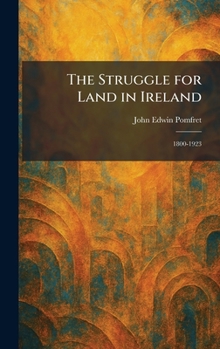
The Struggle for Land in Ireland: 1800-1923

"The Struggle for Land in Ireland, 1800-1923" is a comprehensive historical study of the agrarian conflicts that fundamentally shaped modern Irish society and politics. Covering the period from the Act of Union to the early years of the Irish Free State, this work meticulously examines the shift from a system of predatory landlordism to widespread peasant proprietorship.
The narrative explores the socio-economic pressures, the devastating impact of the Great Famine, and the rise of powerful political movements like the Land League. John E. Pomfret details the legislative battles and the grass-roots resistance that characterized the long campaign for tenant rights and land reform. By analyzing the deep-seated connection between land ownership and Irish national identity, the author reveals how the struggle for the soil was inextricably linked to the broader quest for self-determination. This scholarly account serves as an essential resource for understanding the economic roots of Irish social unrest and the legal transformations that finally secured the rights of the Irish farmer. It remains a vital contribution to the study of Irish history, providing a clear window into the persistence and eventual triumph of a people determined to reclaim their land.
This work has been selected by scholars as being culturally important, and is part of the knowledge base of civilization as we know it. This work was reproduced from the original artifact, and remains as true to the original work as possible. Therefore, you may see the original copyright references, library stamps (as most of these works have been housed in our most important libraries around the world), and other notations in the work.
This work is in the public domain in the United States of America, and possibly other nations. Within the United States, you may freely copy and distribute this work, as no entity (individual or corporate) has a copyright on the body of the work.
As a reproduction of a historical artifact, this work may contain missing or blurred pages, poor pictures, errant marks, etc. Scholars believe, and we concur, that this work is important enough to be preserved, reproduced, and made generally available to the public. We appreciate your support of the preservation process, and thank you for being an important part of keeping this knowledge alive and relevant.
Related Subjects
HistoryCustomer Reviews
ThriftBooks ® and the ThriftBooks ® logo are registered trademarks of Thrift Books Global, LLC
