


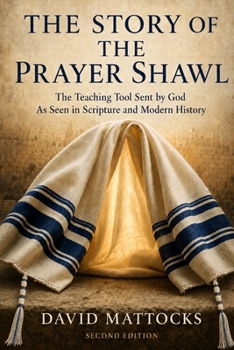
The Story of the Prayer Shawl: The Teaching Tool Sent By God as seen in Scripture and Modern History

The prayer shawl is more than a garment. It is a teaching tool-a visible reminder of covenant, obedience, worship, refuge, and the presence of God.
In this extensively revised second edition, David Mattocks explores the story and symbolism of the tallit through Scripture, Jewish history, Hebrew language, ancient pictographs, numerical associations, and traditional Jewish understanding. Beginning with the Torah's command concerning the tzitzit, the book follows the prayer shawl's imagery through the lives of Ruth and Boaz, Samuel and Saul, David, Elijah and Elisha, Yeshua, and the writers of the New Testament.
The Story of the Prayer Shawl examines such subjects as:
- The tallit as a covering and "little tent"
- The meaning of the corners and the tzitzit
- The blue thread of tekhelet
- The connection between the corner, the wing, and covenant authority
- The tallit as a picture of refuge beneath God's wings
- Ruth spreading the corner of Boaz's garment over herself
- David's cutting of Saul's royal garment
- Elijah's mantle passing to Elisha
- The tallit in prayer, worship, marriage, and blessing
- Yeshua and the woman who touched the corner of His garment
- The possible significance of the burial cloths in the empty tomb
Written from a Hebraic and Scripture-centered perspective, this book invites believers to read the Bible within the covenant world in which it was written. Rabbinical teachings, Jewish customs, historical traditions, and linguistic insights are considered alongside the biblical text, while distinctions are made between what Scripture directly states and what has been preserved through interpretation and tradition.
The Story of the Prayer Shawl calls readers to rediscover the Jewish foundation of biblical faith and to understand the tallit as a physical picture of a greater spiritual reality: God gathers His people beneath His wings, clothes them with His covenant, and calls them to remember and obey His commandments.
This second edition includes illustrations, Hebrew words with vowel points, explanatory charts, a Hebrew glossary, historical material, source notes, and instructions concerning the traditional tying of the tzitzit.
Customer Reviews
ThriftBooks ® and the ThriftBooks ® logo are registered trademarks of Thrift Books Global, LLC
