


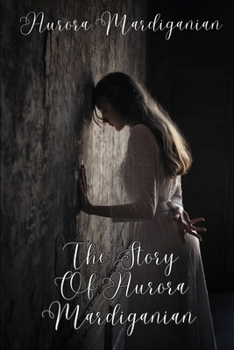
The Story Of Aurora Mardiganian

is a memoir written in 1918 about her experiences during the Armenian genocide. At fourteen, Mardiganian witnessed the murder of her family and endured captivity in Turkish harems while maintaining her Christian faith. She eventually escaped with help from a Canadian missionary and was sent to America to share her story. The book documents brutal atrocities against Armenian women and children, becoming a crucial historical testimony of the massacres. A film adaptation followed in 1919, though all complete copies have been lost.
begins with Easter Sunday morning, in April, 1915. In my father's house we prepared to observe the day with a joyous reverence, increased by the news from Constantinople that the Turkish government recently had expressed its gratitude for the loyal and valuable service of the Armenian troops in the Great War. When Turkey joined in the war, almost six months before, a great fear spread throughout Armenia. Without the protecting influence of France and England, my people were anxious lest the Turks take advantage of their opportunity and begin again the old oppression of their Christian subjects. The young Armenian men would have preferred to fight with the Sultan's enemies, but they hurried to enlist in the Ottoman armies, to prove they were not disloyal. And now that the Sultan had acknowledged their sacrifices, the fear of new persecutions at the hands of our Moslem rulers gradually had disappeared.
And in all our city, Tchemesh-Gedzak, twenty miles north of Harpout, the capital of the district of Mamuret-ul-Aziz, there was none more grateful for the promise of continued peace in Armenia than my father and mother, and Lusanne, my elder sister and I. I was only fourteen years old, and Lusanne was not yet seventeen, but even little girls are always afraid in Armenia.
Customer Reviews
ThriftBooks ® and the ThriftBooks ® logo are registered trademarks of Thrift Books Global, LLC
