
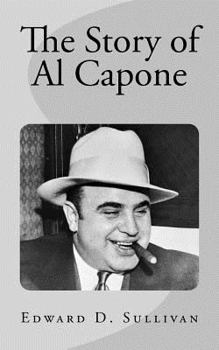
"The Story of Al Capone" is a compelling contemporary examination of one of the most infamous figures in American criminal history. Written while its subject was at the height of his power, Edward D. Sullivan provides a gripping look into the life and operations of the man who became synonymous with the Chicago underworld. The work traces the rise of Capone from his early days in New York to his eventual dominion over a sprawling empire built on bootlegging, gambling, and violent enforcement during the Prohibition era.
Through a journalistic perspective, the narrative captures the lawless atmosphere of the 1920s, illustrating how the defiance of the Volstead Act fueled the growth of sophisticated criminal organizations. Sullivan explores the complex dynamics of the Chicago Outfit, the brutal gang wars that defined the era, and the public fascinations surrounding the man known as "Scarface." By detailing the intersection of crime, politics, and law enforcement, "The Story of Al Capone" serves as an essential primary-style account of the birth of modern organized crime in the United States and offers an invaluable window into the social and cultural tensions of the early twentieth century.
This work has been selected by scholars as being culturally important, and is part of the knowledge base of civilization as we know it. This work was reproduced from the original artifact, and remains as true to the original work as possible. Therefore, you may see the original copyright references, library stamps (as most of these works have been housed in our most important libraries around the world), and other notations in the work.
This work is in the public domain in the United States of America, and possibly other nations. Within the United States, you may freely copy and distribute this work, as no entity (individual or corporate) has a copyright on the body of the work.
As a reproduction of a historical artifact, this work may contain missing or blurred pages, poor pictures, errant marks, etc. Scholars believe, and we concur, that this work is important enough to be preserved, reproduced, and made generally available to the public. We appreciate your support of the preservation process, and thank you for being an important part of keeping this knowledge alive and relevant.
