


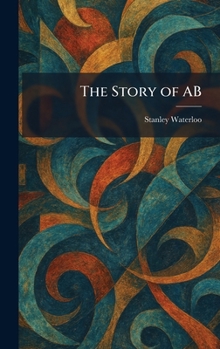
The Story of AB

"The Story of AB" is a foundational work of prehistoric fiction that transports readers back to the dawn of humanity. Set during the Stone Age, the narrative follows the life and trials of Ab, a caveman navigating a world of immense danger and profound discovery. Through Ab's journey, Stanley Waterloo explores the evolution of the human spirit, the mastery of fire, the invention of the bow and arrow, and the development of the complex social structures of early Paleolithic tribes.
Blending anthropological curiosity with an engaging adventure narrative, the book depicts the brutal reality of survival against prehistoric beasts and rival clans. It provides a vivid, imaginative recreation of the shift from primitive instincts to the first glimmers of human civilization. "The Story of AB" remains a significant literary contribution for its early attempt to humanize our distant ancestors, presenting them not as mere savages, but as individuals capable of love, ingenuity, and progress. This classic tale serves as both a gripping survival story and a thoughtful reflection on the common heritage of mankind, making it an essential read for those interested in the origins of humanity and the history of the speculative adventure genre.
This work has been selected by scholars as being culturally important, and is part of the knowledge base of civilization as we know it. This work was reproduced from the original artifact, and remains as true to the original work as possible. Therefore, you may see the original copyright references, library stamps (as most of these works have been housed in our most important libraries around the world), and other notations in the work.
This work is in the public domain in the United States of America, and possibly other nations. Within the United States, you may freely copy and distribute this work, as no entity (individual or corporate) has a copyright on the body of the work.
As a reproduction of a historical artifact, this work may contain missing or blurred pages, poor pictures, errant marks, etc. Scholars believe, and we concur, that this work is important enough to be preserved, reproduced, and made generally available to the public. We appreciate your support of the preservation process, and thank you for being an important part of keeping this knowledge alive and relevant.
Customer Reviews
ThriftBooks ® and the ThriftBooks ® logo are registered trademarks of Thrift Books Global, LLC
