


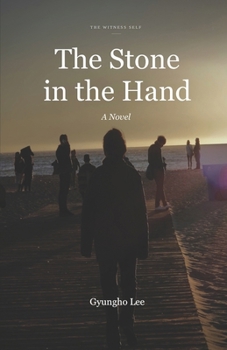
The Stone in the Hand

Thirty years ago, on an ordinary Tuesday morning in a midwestern backyard, something happened to Daniel that he did not seek, could not explain, and could not forget.
It happened again. And again. On a living room floor at midnight. In an academic office on a dead afternoon. In a garage, where his hand threw away a cigarette pack without asking permission from the mind that had been trying to quit for twenty years.
He was a computer scientist, not a mystic. He went to church on Sundays because his wife expected it. None of the books on the spirituality shelf described anything he recognized - they described the approach, the method, the sincere accumulation of effort pointed at a destination. He had not arrived at the destination by any of those methods. It had arrived at him, uninvited, in the middle of ordinary things.
The Stone in the Hand is the account of one ordinary life in which the extraordinary arrived without being sought, settled without being understood, and became, over three decades, as unremarkable as the morning. It is written not for those who have arrived, but for those who have been standing at the edge of something real and have not yet found a book that describes the room from the inside.
"I am not describing a path. I am describing what thirty years of living without one looked like, from the inside."
Drawing on a life that moves from the back rooms of postwar Korea to a tenured academic career in the United States, The Stone in the Hand weaves memoir, philosophy, and quiet observation into a book that does not promise transformation - and for that reason, may produce it.
For readers of The Alchemist, this book will feel both familiar and quietly surprising. Both explore the search for something ultimately real. But where Santiago crosses continents following omens toward a buried treasure, Daniel's discoveries arrive uninvited in a backyard, on a living room floor, in an ordinary garage - no journey required, no preparation sufficient. The Alchemist says: follow the path and the universe will meet you. This book says: it already has. You are standing on it.
Customer Reviews
ThriftBooks ® and the ThriftBooks ® logo are registered trademarks of Thrift Books Global, LLC
