


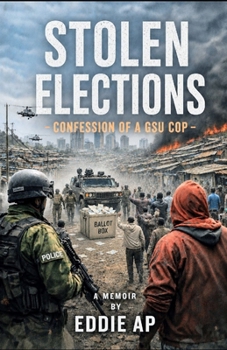
The stolen elections: confession of a GSU cop

Product Description
"I swung my baton at the Kibera protester and missed him by inches."
So begins Stolen Election-a confession seventy years in the making. For the first time, a former General Service Unit (GSU) officer breaks his silence about Kenya's 2007/2008 post-election violence.
This is not the story of politicians trading blame in luxury hotels. It is not another academic report or activist tally of bodies. This is the story from inside the lorry-from the man holding the baton, breathing the tear gas, and waking up years later still haunted by the faces he cannot forget.
The narrator was young, angry, armed, and told he was restoring order. But order, he soon discovered, had a tribal accent. Inside the police force, officers clustered by ethnicity. Orders came down from commanders whose loyalty to the presidency outweighed any oath to the constitution. And on the streets of Kibera, Mathare, and Dandora, violence became routine.
In these pages, you will witness:
A protester beaten until he stops moving-then forgotten by lunchtime
An infant choking on tear gas while armed officers walk past
An Inspector who executes two civilians for the crime of belonging to the "wrong" tribe-and is promoted years later
A Rastafarian conman who cannot name his own wife, yet outsmarts three GSU officers with nothing but audacity and a fake ID
A police camp that nearly mutinies when a Superintendent orders fuel trucks into the slums to burn residents alive
But Stolen Election is more than a catalog of atrocities. It is a moral autopsy of a nation that has learned to dance on the edge of the abyss. The narrator does not ask for forgiveness. He does not offer redemption. He offers only the truth-heavy, ugly, and unfinished.
The book connects 2007 to the 2024 Gen Z protests, arguing that something irreversible has finally shifted in Kenya. The youth are no longer voting along tribal lines. They are no longer afraid. And that, more than any bullet or baton, terrifies the old political class.
Yet the author is no optimist. He knows that the next election is coming. Politicians are already sharpening the same knives. The question is whether Kenya will finally learn from its blood-stained history-or continue pretending not to see the abyss beneath its feet.
What readers are saying (early reviews):
"Raw, unflinching, and necessary. No Kenyan should read this book and remain unchanged."
"The most honest voice to emerge from the security forces in a generation."
"Not comfortable. Not supposed to be. But unforgettable."
About the author:
The author is a former GSU officer who served during the 2007/2008 crisis. He writes under a protected name for security reasons. This is his first and only book-a confession he carried for fifteen years before deciding that silence protects systems, not victims.
Warning: This book contains graphic descriptions of state violence, police brutality, and moral distress. It is not recommended for readers seeking comfortable stories about Kenya's recovery. It is recommended for anyone who wants to understand how elections actually feel on the wrong end of a baton.
Customer Reviews
ThriftBooks ® and the ThriftBooks ® logo are registered trademarks of Thrift Books Global, LLC
