


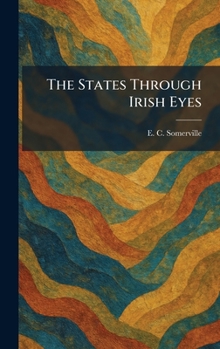
The States Through Irish Eyes

"The States Through Irish Eyes" is a charming and insightful travel narrative that captures the unique impressions of celebrated Irish author E. C. Somerville during her journey across America in the late 1920s. Known for her wit and keen observational skills, Somerville provides a spirited account of the landscapes, social customs, and vibrant personalities she encountered, from the equestrian circles of Virginia to the academic life of New England.
Through her distinct Irish lens, Somerville explores the cultural nuances of a nation on the brink of change, offering readers a window into the bustling energy of the interwar years. Her writing is marked by a blend of humor and curiosity, focusing on the shared connections and striking differences between the Old World and the New. This work stands as a testament to Somerville's literary talent and remains an evocative record of cross-continental travel. "The States Through Irish Eyes" is an essential read for admirers of Somerville and Ross, as well as those interested in the history of American society through the eyes of a sophisticated foreign visitor.
This work has been selected by scholars as being culturally important, and is part of the knowledge base of civilization as we know it. This work was reproduced from the original artifact, and remains as true to the original work as possible. Therefore, you may see the original copyright references, library stamps (as most of these works have been housed in our most important libraries around the world), and other notations in the work.
This work is in the public domain in the United States of America, and possibly other nations. Within the United States, you may freely copy and distribute this work, as no entity (individual or corporate) has a copyright on the body of the work.
As a reproduction of a historical artifact, this work may contain missing or blurred pages, poor pictures, errant marks, etc. Scholars believe, and we concur, that this work is important enough to be preserved, reproduced, and made generally available to the public. We appreciate your support of the preservation process, and thank you for being an important part of keeping this knowledge alive and relevant.
Customer Reviews
ThriftBooks ® and the ThriftBooks ® logo are registered trademarks of Thrift Books Global, LLC
