


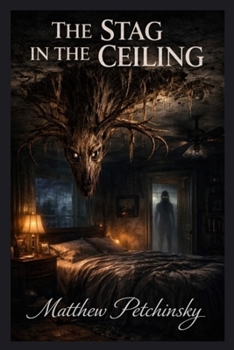
The Stag in the Ceiling

On the second floor of the Briar Hollow Museum of the Unseen, the ceiling begins to change.
At first, Rowan thinks it's stress cracks-old wood settling in a Texas house that remembers too much. But the fractures spread like antlers branching through plaster. At night, something stands upside down above his bed, watching. It does not stomp. It does not roar. It listens.
When Rowan speaks the words, "We do not consent," the museum answers back.
Reality tilts. Rooms stretch vertically. Reflections turn wrong. A law older than grief asserts itself, and something beneath it-hungrier, deeper-presses through the fracture. The Thorned Witness does not attack. It revises. It negotiates. It balances sorrow like architecture.
But consent changes the rules.
As the ceiling lowers and the air turns sharp with unseen presence, Rowan and Maeve must decide whether survival means defiance-or surrender to a structure that has already measured the load-bearing points of their love.
In The Stag in the Ceiling, gothic psychological horror replaces brute violence with invasive dread. This is not a monster story. It is a story about boundaries, perception, and what happens when something ancient becomes unmistakably aware of you.
Customer Reviews
ThriftBooks ® and the ThriftBooks ® logo are registered trademarks of Thrift Books Global, LLC
