


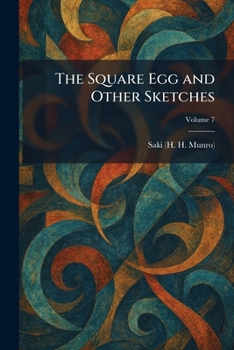
The Square Egg and Other Sketches

"The Square Egg and Other Sketches" is a captivating collection of short stories, plays, and essays by the master of Edwardian satire, H.H. Munro, better known by his pen name Saki. This volume of his works showcases the sharp wit and dark humor that defined his literary career. From the absurd title story to the biting social commentary found in his sketches, the collection offers a poignant glimpse into the mind of an author who could find irony even in the grim realities of the early 20th century.
The book includes a diverse array of pieces, ranging from characteristic tales of mischievous subversion to more somber reflections. Readers will encounter the quintessential Saki style-economical prose, unexpected plot twists, and a keen eye for the hypocrisies of the upper classes. Notable entries highlight his versatility as both a storyteller and a dramatist. "The Square Egg and Other Sketches" serves as a lasting tribute to one of the most unique voices in English literature, blending cynical charm with profound insight into the human condition.
This work has been selected by scholars as being culturally important, and is part of the knowledge base of civilization as we know it. This work was reproduced from the original artifact, and remains as true to the original work as possible. Therefore, you may see the original copyright references, library stamps (as most of these works have been housed in our most important libraries around the world), and other notations in the work.
This work is in the public domain in the United States of America, and possibly other nations. Within the United States, you may freely copy and distribute this work, as no entity (individual or corporate) has a copyright on the body of the work.
As a reproduction of a historical artifact, this work may contain missing or blurred pages, poor pictures, errant marks, etc. Scholars believe, and we concur, that this work is important enough to be preserved, reproduced, and made generally available to the public. We appreciate your support of the preservation process, and thank you for being an important part of keeping this knowledge alive and relevant.
Customer Reviews
ThriftBooks ® and the ThriftBooks ® logo are registered trademarks of Thrift Books Global, LLC
