


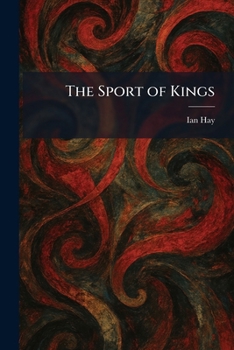
The Sport of Kings

"The Sport of Kings" is a spirited three-act comedy that explores the humorous clash between rigid moral rectitude and the irresistible allure of the racetrack. Written by the celebrated dramatist Ian Hay, the play centers on the character of Amos Purdie, a stern and uncompromising magistrate who publicly condemns the "evils" of betting while privately finding himself drawn into the very world he denounces. Set against the backdrop of 1920s British society, the narrative unfolds with a series of witty exchanges and comedic misunderstandings as Purdie and his household become entangled in the excitement and unpredictability of horse racing.
Through sharp dialogue and clever situational irony, Hay satirizes the hypocrisy of self-righteous authority figures while celebrating the vibrant, if sometimes chaotic, culture of the turf. The play remains a quintessential example of early 20th-century British light comedy, offering a charming glimpse into the social dynamics and popular pastimes of the era. "The Sport of Kings" is a delightful exploration of human nature, demonstrating how even the most disciplined individuals can be swayed by the thrill of a wager. Its enduring appeal lies in its lighthearted approach to social commentary and its timeless comedic timing.
This work has been selected by scholars as being culturally important, and is part of the knowledge base of civilization as we know it. This work was reproduced from the original artifact, and remains as true to the original work as possible. Therefore, you may see the original copyright references, library stamps (as most of these works have been housed in our most important libraries around the world), and other notations in the work.
This work is in the public domain in the United States of America, and possibly other nations. Within the United States, you may freely copy and distribute this work, as no entity (individual or corporate) has a copyright on the body of the work.
As a reproduction of a historical artifact, this work may contain missing or blurred pages, poor pictures, errant marks, etc. Scholars believe, and we concur, that this work is important enough to be preserved, reproduced, and made generally available to the public. We appreciate your support of the preservation process, and thank you for being an important part of keeping this knowledge alive and relevant.
Customer Reviews
ThriftBooks ® and the ThriftBooks ® logo are registered trademarks of Thrift Books Global, LLC
