


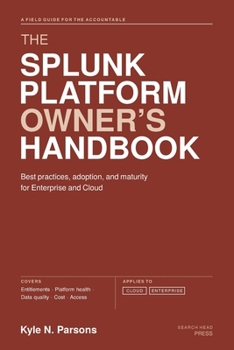
The Splunk Platform Owner’s Handbook: Best practices, adoption, and maturity for Enterprise and Cloud

Somebody in your organization is accountable for whether the Splunk platform works. It is probably you.
That job is rarely defined and almost never handed over. It is not administering the deployment, and it is not any one thing built on it. It is the whole of it, including the parts nobody mentions until they break.
This handbook is what that job is made of: what you bought, whether the platform is healthy, whether the data can be trusted, what it costs, who can see it, and whether anyone is using it. A four-level maturity model runs through all six, from finding out because somebody told you, to deciding what happens next.
What's inside
A maturity self-assessment across six dimensions of ownershipThe entitlements inventory most owners are never shown: pricing models, support programs, credits, and the dates they expireWhat to check weekly, monthly and quarterly, and what each check actually tells youHow data quality problems form upstream, and how to find them before a dashboard lies to youWhy access governance fails, and why permissions only ever addHow to report platform value to the people who fund itWorksheets, a quarterly review agenda, and a starter set of platform metricsThirteen chapters, three appendices, a glossary and an index. Not marketing, not a configuration reference, not a strategy book.
On sourcing. Every factual claim is traced to public Splunk documentation, with the date it was checked. Where something could not be sourced, the book says so rather than guessing on your behalf.
For platform owners, administrators, and the managers who inherit responsibility for a deployment they did not choose.
Customer Reviews
ThriftBooks ® and the ThriftBooks ® logo are registered trademarks of Thrift Books Global, LLC
