


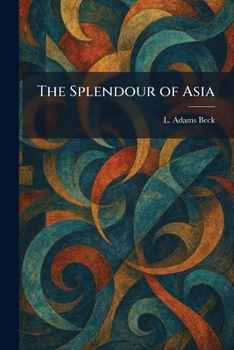
The Splendour of Asia

"The Splendour of Asia" is a captivating fictionalized account of the life and spiritual awakening of Prince Siddhartha Gautama, the historical Buddha. Set against the rich backdrop of ancient India, the narrative follows Siddhartha's journey from the sheltered luxury of his father's palace to his profound realization of the nature of human suffering. L. Adams Beck employs a lyrical and respectful style to depict the prince's transformative quest for truth, his encounters with asceticism, and his ultimate attainment of enlightenment beneath the Bodhi tree.
The work serves as an accessible introduction to the foundations of Buddhist thought, weaving together traditional legends and philosophical insights. Through its vivid descriptions and empathetic portrayal of its protagonist, the book explores themes of renunciation, compassion, and the search for inner peace. "The Splendour of Asia" remains a compelling literary tribute to one of history's most influential spiritual leaders, offering readers a window into the origins of a global religious tradition.
This work has been selected by scholars as being culturally important, and is part of the knowledge base of civilization as we know it. This work was reproduced from the original artifact, and remains as true to the original work as possible. Therefore, you may see the original copyright references, library stamps (as most of these works have been housed in our most important libraries around the world), and other notations in the work.
This work is in the public domain in the United States of America, and possibly other nations. Within the United States, you may freely copy and distribute this work, as no entity (individual or corporate) has a copyright on the body of the work.
As a reproduction of a historical artifact, this work may contain missing or blurred pages, poor pictures, errant marks, etc. Scholars believe, and we concur, that this work is important enough to be preserved, reproduced, and made generally available to the public. We appreciate your support of the preservation process, and thank you for being an important part of keeping this knowledge alive and relevant.
Customer Reviews
ThriftBooks ® and the ThriftBooks ® logo are registered trademarks of Thrift Books Global, LLC
