


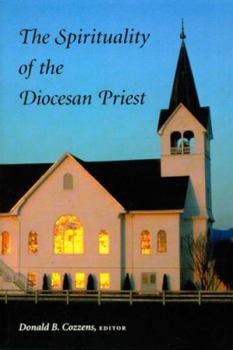
The Spirituality of the Diocesan Priest

Select Format
Select Condition 
Book Overview
Behind the drop in seminarians and the declining numbers of priests, behind the sexual misconduct scandals shaking the confidence and trust once readily given to priests, a spiritual deepening and maturing is quietly renewing the spirit and confidence of the diocesan priest. In this collection, twelve priests and bishops reflect on the spirituality of the diocesan priest from their personal and pastoral experience. Have diocesan priests finally transcended the monastic and religious order spiritualities that have shaped their prayer and interior lives for centuries? Is a spirituality proper to the diocesan priest emerging precisely at a time when the priesthood is under such close scrutiny? The contributors - pastors, theologians, poets, and bishops - grapple with the maturing of the diocesan priest's soul.
Format:Paperback
Language:English
ISBN:0814624219
ISBN13:9780814624210
Release Date:March 1997
Publisher:Liturgical Press
Length:208 Pages
Weight:0.92 lbs.
Dimensions:0.5" x 6.0" x 9.0"
Customer Reviews
1 rating
An ordinary holiness
Published by Thriftbooks.com User , 23 years ago
I first happened upon the book The Spirituality of the Diocesan Priest at a Sursum Corda event held a few years ago in Techny, outside of Chicago. Sursum Corda is a gathering of Old Catholic clergy and lay leaders who come together to explore and share areas of common interest and struggles with each other. Because there is no overarching hierarchy or community/institutional structure that binds them altogether, the Old Catholics must look for other ways to be in fellowship and communication with each other. To a certain extent, that made the find of Donald Cozzens' book at this event so apropos. One of the issues for diocesan priests in the Roman Catholic church is similar - what structures and community is there for support of a spiritual life? First, perhaps a bit of structural knowledge is required. Not all priests in the Roman Catholic church are diocesan priests. Many belong to monastic orders, or various other orders that provide spiritual support, guidelines and community. Jesuits, Dominicans and others have differing kinds of communities that encourage, through rules and practices, gatherings and accountability systems, spiritual development in their members. The `ordinary' diocesan priest rarely has these kinds of supports. To work in the `secular' world becomes a distraction, sometimes a definite hindrance to spiritual growth and practice. In this sense, it is analogous to the situation in which many Old Catholic priests find themselves. Most Old Catholic clergy have to be `tent-maker' clerics. The label `tent-maker' hearkens back to the apostle Paul, who did not see, nor did he use, his ministry as a means for making money, but rather preferred to continue to ply his trade (tent-making) during his journeys. Most Old Catholics have no choice but to continue to make a living through another means, as they do not have parishes and dioceses and community/institutional structures that provide financial benefits. `The Spirituality of the Diocesan Priest,' edited by Donald Cozzens, is written by and about Roman Catholic hierarchs. This, however, is merely a starting point, and not a final word. Clergy and lay leaders of many denominations can find through this analysis insights into their own situations. There are a dozen contributors to this text: Donald Cozzens, Denis Edwards, William Hammer, Robert Morneau, Frank McNully, Edward Pfnausch, James Provost, Sylvester Ryan, Robert Schwartz, William Shannon, Richard Skelba, and Kenneth Untener. Almost all have direct experience as diocesan priests, past or present. All are men who are experienced with the experiences of and the training of diocesan priests. If there is one shortcoming with the text, it is that there is no female voice reflecting on the issue - a contributor such as Joan Chittister, who has written extensively on Benedictine spirituality, might be a welcome perspective. The first chapter, with the wonderful title of `Servant of the Servants of God: A Pastor's Spirituality,' Robe
Copyright © 2026 Thriftbooks.com
Terms of Use | Privacy Policy | Do Not Sell/Share My Personal Information | Cookie Policy | Cookie Preferences | Accessibility Statement
ThriftBooks ® and the ThriftBooks ® logo are registered trademarks of Thrift Books Global, LLC
ThriftBooks ® and the ThriftBooks ® logo are registered trademarks of Thrift Books Global, LLC
