


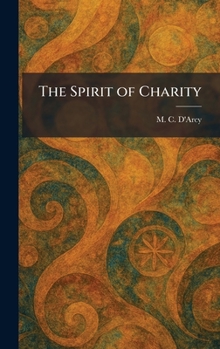
The Spirit of Charity

"The Spirit of Charity" is a profound exploration of the central Christian virtue of love, written by the esteemed theologian and philosopher M.C. D'Arcy. In this work, D'Arcy delves into the theological and practical dimensions of charity, distinguishing it from mere philanthropy or sentimentality. He examines how the spirit of charity serves as the foundation for the spiritual life and the ultimate expression of the soul's relationship with the Divine.
Throughout the book, the author reflects on the nature of God's love for humanity and the corresponding call for individuals to reflect that love in their daily lives and interactions. By blending intellectual rigor with spiritual insight, D'Arcy provides a compelling analysis of how charity transforms the human heart and informs moral character. This work is an essential resource for those seeking a deeper understanding of Catholic moral theology and the philosophical underpinnings of Christian altruism. "The Spirit of Charity" remains a timeless contribution to religious literature, offering guidance for anyone striving to live a life guided by the principles of selfless love and spiritual devotion.
This work has been selected by scholars as being culturally important, and is part of the knowledge base of civilization as we know it. This work was reproduced from the original artifact, and remains as true to the original work as possible. Therefore, you may see the original copyright references, library stamps (as most of these works have been housed in our most important libraries around the world), and other notations in the work.
This work is in the public domain in the United States of America, and possibly other nations. Within the United States, you may freely copy and distribute this work, as no entity (individual or corporate) has a copyright on the body of the work.
As a reproduction of a historical artifact, this work may contain missing or blurred pages, poor pictures, errant marks, etc. Scholars believe, and we concur, that this work is important enough to be preserved, reproduced, and made generally available to the public. We appreciate your support of the preservation process, and thank you for being an important part of keeping this knowledge alive and relevant.
Customer Reviews
ThriftBooks ® and the ThriftBooks ® logo are registered trademarks of Thrift Books Global, LLC
