


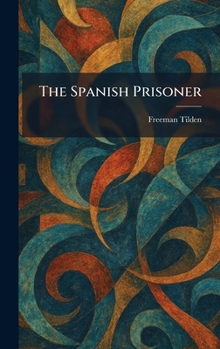
The Spanish Prisoner

"The Spanish Prisoner" is a spirited and engaging novel that explores the intricacies of one of history's most enduring confidence games. Set in the early 20th century, the story follows a protagonist who finds himself drawn into a complex web of deceit when he receives a mysterious letter from a man supposedly imprisoned in Spain. The writer claims to be a wealthy political exile in need of financial assistance to recover a hidden fortune, promising a vast reward in return.
Written by Freeman Tilden, this work blends elements of mystery, comedy, and social satire. It masterfully dissects the psychology of the scam, illustrating how greed and the desire for adventure can lead even the most sensible individuals into precarious situations. As the plot unfolds, the narrative takes readers on a journey through a world of international intrigue and clever manipulations.
"The Spanish Prisoner" serves as both a compelling piece of classic fiction and a timeless commentary on human nature. Tilden's sharp wit and brisk pacing ensure that the tale remains as entertaining today as it was at the time of its writing. This novel is a must-read for fans of classic crime fiction and those fascinated by the art of the long con.
This work has been selected by scholars as being culturally important, and is part of the knowledge base of civilization as we know it. This work was reproduced from the original artifact, and remains as true to the original work as possible. Therefore, you may see the original copyright references, library stamps (as most of these works have been housed in our most important libraries around the world), and other notations in the work.
This work is in the public domain in the United States of America, and possibly other nations. Within the United States, you may freely copy and distribute this work, as no entity (individual or corporate) has a copyright on the body of the work.
As a reproduction of a historical artifact, this work may contain missing or blurred pages, poor pictures, errant marks, etc. Scholars believe, and we concur, that this work is important enough to be preserved, reproduced, and made generally available to the public. We appreciate your support of the preservation process, and thank you for being an important part of keeping this knowledge alive and relevant.
Related Subjects
Fiction Humor Humor & Entertainment Literature & Fiction Mystery, Thriller & SuspenseCustomer Reviews
ThriftBooks ® and the ThriftBooks ® logo are registered trademarks of Thrift Books Global, LLC
