


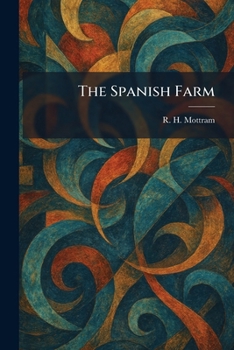
The Spanish Farm

"The Spanish Farm" is a seminal work of British literature from the post-Great War era, offering a unique and gritty perspective on the First World War. Set in the landscape of French Flanders, the narrative focuses on Madeleine Vanderlynden, a resilient and fiercely pragmatic young woman who manages her family's farm while it serves as a revolving billet for British soldiers stationed behind the lines.
Unlike many contemporary war novels that focus exclusively on the horrors of the trenches, R.H. Mottram provides a nuanced exploration of the intersection between civilian survival and military necessity. Madeleine stands as a compelling protagonist, navigating the complexities of romance, administrative bureaucracy, and the harsh realities of a countryside under siege. The novel is celebrated for its meticulous realism and its refusal to sentimentally gloss over the psychological and economic toll of the conflict.
Awarded the Hawthornden Prize, "The Spanish Farm" remains a cornerstone of 20th-century historical fiction. It serves as a profound meditation on the endurance of the human spirit and the lasting transformation of the European landscape during one of history's most turbulent periods. Mottram's work captures the quiet, everyday struggles of those caught in the periphery of battle, making it an essential read for understanding the social fabric of the WWI era.
This work has been selected by scholars as being culturally important, and is part of the knowledge base of civilization as we know it. This work was reproduced from the original artifact, and remains as true to the original work as possible. Therefore, you may see the original copyright references, library stamps (as most of these works have been housed in our most important libraries around the world), and other notations in the work.
This work is in the public domain in the United States of America, and possibly other nations. Within the United States, you may freely copy and distribute this work, as no entity (individual or corporate) has a copyright on the body of the work.
As a reproduction of a historical artifact, this work may contain missing or blurred pages, poor pictures, errant marks, etc. Scholars believe, and we concur, that this work is important enough to be preserved, reproduced, and made generally available to the public. We appreciate your support of the preservation process, and thank you for being an important part of keeping this knowledge alive and relevant.
Customer Reviews
ThriftBooks ® and the ThriftBooks ® logo are registered trademarks of Thrift Books Global, LLC
