


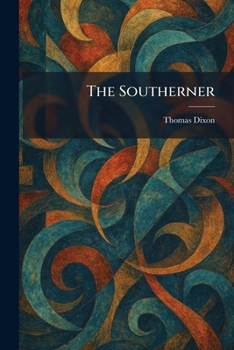
The Southerner

"The Southerner" is a compelling biographical novel that explores the life and legacy of Abraham Lincoln through a distinctively Southern lens. Written by Thomas Dixon, the narrative delves into the complexities of the sixteenth president's character, tracing his journey from his humble origins in Kentucky to the harrowing years of the American Civil War. The work portrays Lincoln not just as a political leader, but as a man deeply connected to his Southern roots, caught in the tragic struggle of a nation divided against itself.
The story weaves together historical events with dramatic interpretation, focusing on the immense personal and political pressures Lincoln faced as he navigated the bloodiest conflict in American history. Dixon emphasizes Lincoln's humanity, his wit, and his unwavering commitment to the Union, while also highlighting the cultural and familial ties that bound him to the very region he was forced to combat. Through vivid characterizations and intense emotional stakes, "The Southerner" offers a unique perspective on the Civil War era, blending historical realism with the traditions of early 20th-century fiction. This work serves as a significant example of historical storytelling, reflecting the enduring fascination with one of America's most pivotal figures and the complex heritage of the American South.
This work has been selected by scholars as being culturally important, and is part of the knowledge base of civilization as we know it. This work was reproduced from the original artifact, and remains as true to the original work as possible. Therefore, you may see the original copyright references, library stamps (as most of these works have been housed in our most important libraries around the world), and other notations in the work.
This work is in the public domain in the United States of America, and possibly other nations. Within the United States, you may freely copy and distribute this work, as no entity (individual or corporate) has a copyright on the body of the work.
As a reproduction of a historical artifact, this work may contain missing or blurred pages, poor pictures, errant marks, etc. Scholars believe, and we concur, that this work is important enough to be preserved, reproduced, and made generally available to the public. We appreciate your support of the preservation process, and thank you for being an important part of keeping this knowledge alive and relevant.
Customer Reviews
ThriftBooks ® and the ThriftBooks ® logo are registered trademarks of Thrift Books Global, LLC
