ISBN: 0218511213
ISBN13: 9780218511215
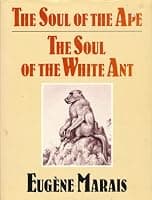
The soul of the ape
$55.99
ISBN: 0218511213
ISBN13: 9780218511215
Formats
Conditions
A read copy that remains in clean condition.
Formats
Conditions
A read copy that remains in clean condition.
Conditions
A read copy that remains in clean condition.
Formats
Conditions
A read copy that remains in clean condition.
I first find out about this book because there is a sublime hint in my all-favorite movie Antonioni's "The Passenger". David Locke, a hero, is about to succumb to a deep unconsciousness calling to embark on the journey towards his destiny of loneliness and death - there, by a shade of his reading lamp, is the "The soul of the Ape". Eugene Marais, was a South African lawyer, physician and journalist, and the semi-professional etiologist. After the devastating effect of the Boer war on his country, Marais and companion retreat to the remote canyon in Transvaal to study the behavior of the troop of baboons. The books main thesis that there are 2 types of memory - the philetic, e.g. instinctual genetic memory, and the experiential, intellectual memory reinforced by learning. Those two parallel trends follow the aspects of the life of the baboons - hunting, orientation, and the supremely human trends such as drug addiction and elaborate sexual behavior. Marais concludes, that there are so much more in the "soul" of the ape, which resembles the traits of our own species. Overall, the book is a fascinating read, and was a very forward-looking research in his strange time of hesitation, after the disallusement with Freud and before Lorenz and Watson.