


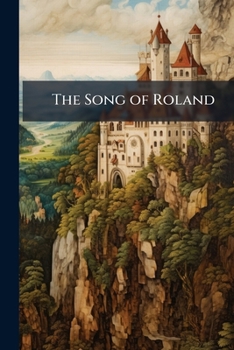
The Song of Roland: A Summary for the Use of English Readers, With Verse Renderings of Typical Passages

"The Song of Roland" is a cornerstone of French literature, an epic poem recounting the Battle of Roncevaux Pass in 778, during the reign of Charlemagne. This edition offers a summary tailored for English readers, providing access to the heart of the narrative and its key themes. Included are verse renderings of pivotal passages, allowing readers to appreciate the poem's original form and poetic style.
The story follows Roland, a brave knight and one of Charlemagne's chief paladins, as he faces betrayal and overwhelming odds. His unwavering loyalty, courage, and Christian faith are central to the poem's enduring appeal. "The Song of Roland" explores themes of honor, sacrifice, and the clash between Christianity and Islam during the medieval period.
This summary makes the epic accessible to a modern audience, retaining the essence of the original while providing historical context. It allows readers to understand the poem's significance as both a literary masterpiece and a reflection of medieval values.
This work has been selected by scholars as being culturally important, and is part of the knowledge base of civilization as we know it. This work was reproduced from the original artifact, and remains as true to the original work as possible. Therefore, you will see the original copyright references, library stamps (as most of these works have been housed in our most important libraries around the world), and other notations in the work.
This work is in the public domain in the United States of America, and possibly other nations. Within the United States, you may freely copy and distribute this work, as no entity (individual or corporate) has a copyright on the body of the work.
As a reproduction of a historical artifact, this work may contain missing or blurred pages, poor pictures, errant marks, etc. Scholars believe, and we concur, that this work is important enough to be preserved, reproduced, and made generally available to the public. We appreciate your support of the preservation process, and thank you for being an important part of keeping this knowledge alive and relevant.
Customer Reviews
ThriftBooks® and the ThriftBooks® logo are registered trademarks of Thrift Books Global, LLC
