


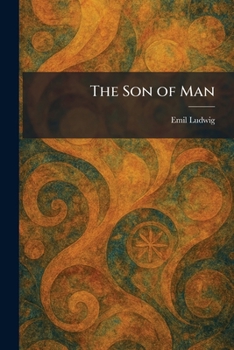
The Son of Man

"The Son of Man" is a compelling biographical study that seeks to explore the humanity and inner life of Jesus of Nazareth. Written by the renowned biographer Emil Ludwig, this work moves away from strict theological dogma to present a vivid psychological portrait of a man driven by profound vision and conviction. Ludwig focuses on the emotional and historical context of Jesus's life, portraying him as a figure of immense moral power, poetic sensitivity, and human vulnerability.
Throughout the narrative, the author examines the cultural and political landscape of first-century Judea, tracing the development of Jesus's message from his early days in Galilee to the climactic events in Jerusalem. By emphasizing the "Son of Man" aspect of his subject, Ludwig offers readers an accessible and narrative-driven account of a life that transformed the course of human history. This work serves as both a significant literary achievement and a provocative historical inquiry into one of the most influential figures of all time, making it an essential read for those interested in the historical Jesus and the intersection of biography and spirituality.
This work has been selected by scholars as being culturally important, and is part of the knowledge base of civilization as we know it. This work was reproduced from the original artifact, and remains as true to the original work as possible. Therefore, you may see the original copyright references, library stamps (as most of these works have been housed in our most important libraries around the world), and other notations in the work.
This work is in the public domain in the United States of America, and possibly other nations. Within the United States, you may freely copy and distribute this work, as no entity (individual or corporate) has a copyright on the body of the work.
As a reproduction of a historical artifact, this work may contain missing or blurred pages, poor pictures, errant marks, etc. Scholars believe, and we concur, that this work is important enough to be preserved, reproduced, and made generally available to the public. We appreciate your support of the preservation process, and thank you for being an important part of keeping this knowledge alive and relevant.
Customer Reviews
ThriftBooks ® and the ThriftBooks ® logo are registered trademarks of Thrift Books Global, LLC
