
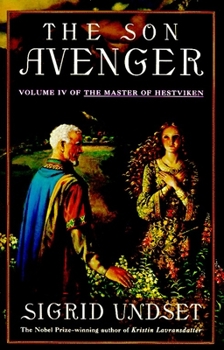
"The Son Avenger" is the powerful concluding volume of Sigrid Undset's monumental medieval saga, "The Master of Hestviken". Set in thirteenth-century Norway, this work brings the life of Olav Audunss , n to its dramatic and spiritual climax. Having lived a life shadowed by a secret murder and the weight of unconfessed sin, Olav must navigate his complex relationship with his heir, Eirik, and the shifting social tides of his era.
Undset masterfully explores themes of divine justice, earthly consequence, and the possibility of reconciliation. As Olav approaches the end of his days, the narrative focuses on the internal struggle between his personal pride and his need for peace with God. The novel provides a vivid, meticulously researched portrait of medieval life, blending domestic drama with profound theological reflection.
Known for its psychological depth and atmospheric prose, "The Son Avenger" stands as a cornerstone of historical fiction. It completes a journey that is both a personal tragedy and a grand exploration of the human soul. This work showcases why Undset was awarded the Nobel Prize in Literature, offering a timeless meditation on guilt, faith, and the enduring bonds of family.
This work has been selected by scholars as being culturally important, and is part of the knowledge base of civilization as we know it. This work was reproduced from the original artifact, and remains as true to the original work as possible. Therefore, you may see the original copyright references, library stamps (as most of these works have been housed in our most important libraries around the world), and other notations in the work.
This work is in the public domain in the United States of America, and possibly other nations. Within the United States, you may freely copy and distribute this work, as no entity (individual or corporate) has a copyright on the body of the work.
As a reproduction of a historical artifact, this work may contain missing or blurred pages, poor pictures, errant marks, etc. Scholars believe, and we concur, that this work is important enough to be preserved, reproduced, and made generally available to the public. We appreciate your support of the preservation process, and thank you for being an important part of keeping this knowledge alive and relevant.

