


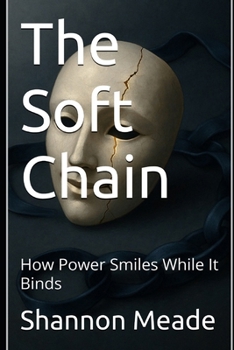
The Soft Chain: How Power Smiles While It Binds

The Soft Chain: How Power Smiles While It Binds
In an age when control no longer wears a uniform, The Soft Chain reveals the anatomy of obedience beneath civilization's velvet touch. We no longer live under overt tyranny, but within an empire of smiles-one that governs not by force, but by tone, etiquette, and emotional conditioning. This is power's final evolution: domination disguised as care.
Through a series of lyrical, razor-edged essays, Shannon Meade dissects how kindness becomes a leash, calmness becomes control, and empathy becomes surveillance. Each chapter unpacks a subtle machinery of manipulation: how institutions weaponize politeness, how corporations commodify morality, how governments perfect the art of gentle coercion. It is a philosophy book written like a psychological thriller-beautiful, unsettling, and uncomfortably true.
In The Polite Cage, Meade explores the language of control-the "nice" phrases that keep citizens obedient while believing themselves free. The Surveillance of Emotion exposes the rise of affective capitalism, where mood becomes data and serenity is a social duty. The Citizen as Brand charts the conversion of identity into content, morality into marketing. The Psychology of Obedience and The Cult of Calm follow power into the body and the mind, showing how we come to police ourselves in the name of professionalism, wellness, and peace.
The book culminates in The Soft Apocalypse-a vision of society's collapse not through violence, but through awakening-and Lucid Disobedience, a blueprint for living freely in a world that trains us to smile while we submit.
Drawing on the precision of a trial lawyer and the sensibility of a poet, Meade transforms theory into revelation. Each page is an act of excavation-stripping away the euphemisms that keep oppression polite. The prose is lyrical yet surgical, combining psychological insight, social critique, and moral philosophy with haunting clarity.
The Soft Chain is not a manifesto of anger-it is a map for consciousness. It teaches readers to see how control hides in comfort, how consent can be manufactured through civility, and how freedom begins the moment we stop mistaking politeness for peace.
For readers of Orwell, Arendt, Foucault, and Han-yet written in a voice that feels intimate, modern, and defiantly human-this book offers both diagnosis and cure: wakefulness.
Because every age invents its own form of slavery,
and ours has simply learned to smile while it binds.
Related Subjects
PhilosophyCustomer Reviews
ThriftBooks ® and the ThriftBooks ® logo are registered trademarks of Thrift Books Global, LLC
