


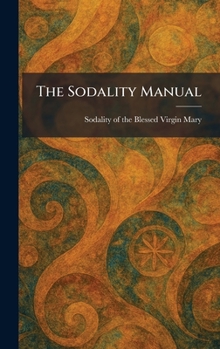
The Sodality Manual

"The Sodality Manual" serves as a comprehensive guide for the Sodality of the Blessed Virgin Mary, a prominent association within the Catholic Church dedicated to fostering spiritual growth and apostolic service under the patronage of the Mother of God. This essential resource provides the framework for members to deepen their religious life through a structured program of prayer, devotion, and community action.
The manual contains a wealth of liturgical materials, including specific rules of the order, office prayers, litanies, and instructions for regular meetings and solemn observances. It emphasizes the dual mission of the Sodality: the personal sanctification of its members and the performance of charitable works for the benefit of others. By detailing the customs and spiritual exercises expected of its participants, the work offers a clear path for living a life of disciplined faith. As a historical reflection of early 20th-century Catholic practice, "The Sodality Manual" remains a significant document for those interested in the traditions of Marian sodalities and the history of lay religious organizations. Its focus on devotion to the Blessed Virgin Mary and the cultivation of Christian virtues provides a timeless look at traditional Catholic piety.
This work has been selected by scholars as being culturally important, and is part of the knowledge base of civilization as we know it. This work was reproduced from the original artifact, and remains as true to the original work as possible. Therefore, you may see the original copyright references, library stamps (as most of these works have been housed in our most important libraries around the world), and other notations in the work.
This work is in the public domain in the United States of America, and possibly other nations. Within the United States, you may freely copy and distribute this work, as no entity (individual or corporate) has a copyright on the body of the work.
As a reproduction of a historical artifact, this work may contain missing or blurred pages, poor pictures, errant marks, etc. Scholars believe, and we concur, that this work is important enough to be preserved, reproduced, and made generally available to the public. We appreciate your support of the preservation process, and thank you for being an important part of keeping this knowledge alive and relevant.
Customer Reviews
ThriftBooks ® and the ThriftBooks ® logo are registered trademarks of Thrift Books Global, LLC
