


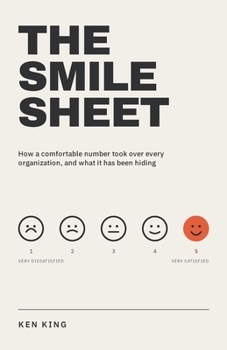
The Smile Sheet: How a Comfortable Number Took Over Every Organization, and What It Has Been Hiding

Four point eight out of five. That number is on a slide somewhere in your organization right now. It came from a form handed out at the end of a session, a class, a shift, a conference, a hospital stay. People clicked, the average went up the chain, and the chain called it evidence.
The Smile Sheet is about what that number actually measures, which is not what anyone thinks it measures. Drawing on research from psychology, medicine, sport, education, and the events industry, Ken King shows how the most trusted instrument in modern organizations asks people to report on an experience they cannot reliably see, at the one moment they are least equipped to see it. The result is a comfortable number that hides the very thing it was built to find.
This is not a case against asking people questions. It is a case about distance: the further a report sits from the moment it describes, the less it knows. And it is a field guide to the alternative that now exists, one that counts what people do instead of what they say they felt.
Inside:
Why the standing ovation is a seating chart, not a verdictGhost Data: the behavior that happened in the room and never made it into the reportThe Witness Problem, the Bothered Sample, and the Confidence TaxWhat sport, medicine, and the classroom already know about watching instead of askingHow to read the next satisfaction score you are handed, and what to ask for insteadIf you run events, teach, coach, treat patients, manage a team, or sit anywhere a satisfaction score gets reported upward, this book will change what you count.
Customer Reviews
ThriftBooks ® and the ThriftBooks ® logo are registered trademarks of Thrift Books Global, LLC
