


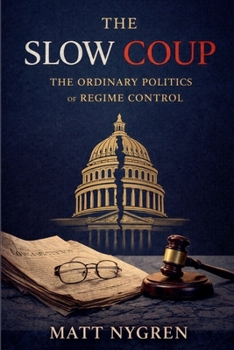
The Slow Coup

Democratic breakdown no longer arrives with tanks in the streets or constitutions torn up overnight. In many countries, democratic institutions remain visible even as their ability to restrain power quietly erodes.
The Slow Coup examines how modern regimes consolidate control without formally abandoning elections, courts, or democratic language. Drawing on comparative political analysis and real-world cases, the book shows how power is stabilized through ordinary governance: changes to electoral rules, administrative discretion, selective enforcement, media fragmentation, emergency authority, and the quiet repurposing of institutions meant to ensure accountability.
Rather than focusing on dramatic collapse or authoritarian takeover, this book traces the incremental process through which uncertainty is reduced, opposition becomes manageable, and participation continues without producing meaningful change. Elections are held, courts rule, journalism persists, and civil society remains active - yet outcomes grow increasingly predictable and difficult to reverse.
Written for readers interested in politics, governance, and institutional design, The Slow Coup offers a diagnostic framework rather than a partisan argument. It does not advocate policies or movements. Instead, it explains how democratic systems can lose their capacity for self-correction while appearing intact, and why reform efforts so often arrive after leverage has already shifted.
This is a book for students, scholars, journalists, policymakers, and engaged readers who want to understand how democratic erosion actually works in the twenty-first century - and why it so often goes unrecognized until it is too late.
Customer Reviews
ThriftBooks® and the ThriftBooks® logo are registered trademarks of Thrift Books Global, LLC
