


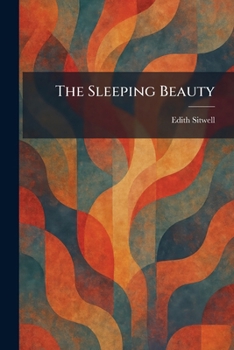
The Sleeping Beauty

"The Sleeping Beauty" is a sophisticated and evocative poetic sequence by the renowned Modernist writer Edith Sitwell. Moving beyond a simple retelling of the classic fairy tale, Sitwell employs her distinctive command of rhythm, texture, and sound to create a dreamlike landscape where the boundaries between the physical world and the subconscious blur.
The work reinterprets the familiar story of the princess under a hundred-year curse, imbuing it with a melancholic beauty and sharp observational wit characteristic of Sitwell's avant-garde approach to verse. Through intricate imagery and experimental linguistic patterns, the poem explores themes of time, nature, and the transition from childhood innocence to the complexities of adulthood. "The Sleeping Beauty" stands as a significant contribution to 20th-century British poetry, showcasing the author's ability to transform traditional folklore into a profound and modernist sensory experience. Readers will find themselves transported to an enchanted yet unsettling realm, crafted with the rhythmic precision that defined Sitwell's literary legacy.
This work has been selected by scholars as being culturally important, and is part of the knowledge base of civilization as we know it. This work was reproduced from the original artifact, and remains as true to the original work as possible. Therefore, you may see the original copyright references, library stamps (as most of these works have been housed in our most important libraries around the world), and other notations in the work.
This work is in the public domain in the United States of America, and possibly other nations. Within the United States, you may freely copy and distribute this work, as no entity (individual or corporate) has a copyright on the body of the work.
As a reproduction of a historical artifact, this work may contain missing or blurred pages, poor pictures, errant marks, etc. Scholars believe, and we concur, that this work is important enough to be preserved, reproduced, and made generally available to the public. We appreciate your support of the preservation process, and thank you for being an important part of keeping this knowledge alive and relevant.
Related Subjects
PoetryCustomer Reviews
ThriftBooks ® and the ThriftBooks ® logo are registered trademarks of Thrift Books Global, LLC
