


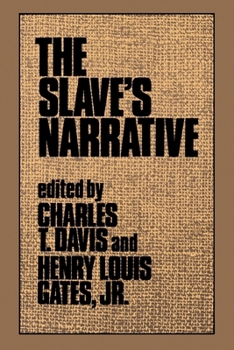
The Slave's Narrative

Select Format
Select Condition 
Book Overview
These autobiographies of Afro-American ex-slaves comprise the largest body of literature produced by slaves in human history. The book consists of three sections: selected reviews of slave narratives, dating from 1750 to 1861; essays examining how such narratives serve as historical material; and essays exploring the narratives as literary artifacts.
Format:Paperback
Language:English
ISBN:0195066561
ISBN13:9780195066562
Release Date:February 1991
Publisher:Oxford University Press
Length:384 Pages
Weight:1.25 lbs.
Dimensions:1.1" x 6.1" x 9.2"
Customer Reviews
2 ratings
Useful Classroom Text
Published by Thriftbooks.com User , 16 years ago
I use this text every semester to teach slave narratives because it features the most important 20th century critical essays about slave narratives. However it needs to be updated to include more recent essays published since 1988. Still, it's indispensable and accessible to my undergraduate students who have no background in literary criticism.
A must-read for those interested in narrative or slavery
Published by Thriftbooks.com User , 27 years ago
Students of slavery or the narrative form will find this book invaluable. This is a unique collection of essays concerning various aspects of slave narratives. Essays consider difficult questions, such as textual authenticity, in terms of whether texts were written by ex-slaves or abolitionists; fictional and nonfictional elements in slave narratives; and dialect usage.Nearly all of the essays effortlessly tie in analysis of the narrative form with the subject of slavery. The essays focusing on narratives as literature are especially good. These essays include essays on slave narratives as autobiographies; the slave narrative of Juan Francisco Manzano, whose linear organization is punctuated by moments of torture expressed by textual discontinuities; the feminist slave narrative of Harriet Jacobs; and picaresque slave narratives.
Copyright © 2026 Thriftbooks.com Terms of Use
| Privacy Policy | Do Not
Sell/Share My Personal Information | Cookie Policy | Cookie Preferences | Accessibility Statement
ThriftBooks® and the ThriftBooks® logo are registered trademarks of Thrift Books Global, LLC
ThriftBooks® and the ThriftBooks® logo are registered trademarks of Thrift Books Global, LLC
