


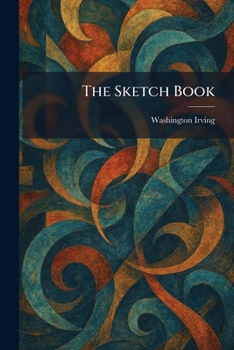
The Sketch Book

"The Sketch Book" is a cornerstone of American literature, representing Washington Irving's most celebrated contribution to the short story genre. Writing under the pseudonym Geoffrey Crayon, Irving weaves together a diverse tapestry of sketches, travelogues, and narrative fiction that explores the customs and landscapes of both England and America. This collection is best known for introducing two of the most enduring figures in American folklore: the sleepy-eyed Rip Van Winkle and the ill-fated schoolmaster Ichabod Crane.
Through the iconic tales of "Rip Van Winkle" and "The Legend of Sleepy Hollow," Irving masterfully blends gothic elements with humor and nostalgia, capturing the essence of the Catskill Mountains and early American life. Beyond these famous legends, the work offers insightful observations on English Christmas traditions and the historical intersections between the Old and New Worlds. Irving's elegant prose and keen eye for detail make this volume an essential read for those interested in the development of the American literary voice. "The Sketch Book" remains a testament to the power of storytelling to bridge cultures and preserve the myths of a burgeoning nation.
This work has been selected by scholars as being culturally important, and is part of the knowledge base of civilization as we know it. This work was reproduced from the original artifact, and remains as true to the original work as possible. Therefore, you may see the original copyright references, library stamps (as most of these works have been housed in our most important libraries around the world), and other notations in the work.
This work is in the public domain in the United States of America, and possibly other nations. Within the United States, you may freely copy and distribute this work, as no entity (individual or corporate) has a copyright on the body of the work.
As a reproduction of a historical artifact, this work may contain missing or blurred pages, poor pictures, errant marks, etc. Scholars believe, and we concur, that this work is important enough to be preserved, reproduced, and made generally available to the public. We appreciate your support of the preservation process, and thank you for being an important part of keeping this knowledge alive and relevant.
Customer Reviews
ThriftBooks ® and the ThriftBooks ® logo are registered trademarks of Thrift Books Global, LLC
