


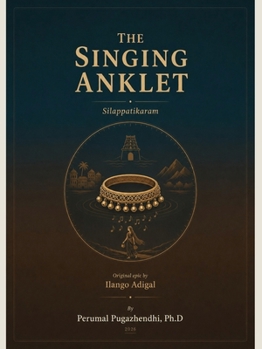
THE SINGING ANKLET Silappatikaram

History is often told through the stories of kings, empires, temples, and monuments. Yet many of the world's greatest civilizations left behind something even more enduring than stone-they left ideas, language, and knowledge. Ancient Tamil civilization belongs to that remarkable tradition.
For generations, scholars have admired the richness of Tamil literature, especially the Sangam corpus and the Tolkappiyam. These works describe a society with refined language, organized social life, flourishing trade, ethical values, and deep knowledge of nature. However, an important question has remained: Were these literary descriptions based on a real civilization, or were they simply poetic imagination?
This book explores that question through evidence rather than belief.
Modern archaeology has transformed our understanding of the ancient Tamil world. Excavations at Keezhadi and many other sites have uncovered urban settlements, brick structures, industries, inscriptions, pottery, trade goods, and everyday objects dating back more than two thousand years. These discoveries allow us to compare archaeological evidence with the descriptions preserved in classical Tamil literature.
The purpose of this book is not to promote myths, political views, or cultural pride without evidence. Instead, it examines what archaeology, linguistics, inscriptions, literature, and historical research reveal when studied together. Each chapter presents facts, asks questions, and encourages readers to evaluate the available evidence critically.
The title, "ஹரப்பா, கீழடியா முக்கியம்?" (Harappa or Keezhadi-Which Matters More?), is not intended to create competition between civilizations. Rather, it invites readers to understand that every civilization deserves to be studied on its own evidence and historical context. India's past is enriched by the contributions of many ancient cultures, each adding to the larger human story.
Whether you are a student, teacher, researcher, or simply curious about history, this book invites you to journey beyond assumptions and explore the fascinating evidence of one of the world's longest continuously living civilizations. By understanding the discoveries beneath the soil, we gain a deeper appreciation of the knowledge, creativity, and resilience that have shaped Tamil civilization across more than two millennia.
Customer Reviews
ThriftBooks ® and the ThriftBooks ® logo are registered trademarks of Thrift Books Global, LLC
