


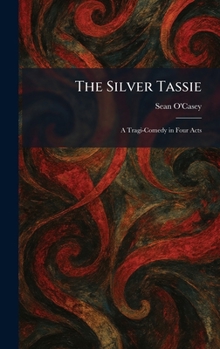
The Silver Tassie: A Tragi-Comedy in Four Acts

"The Silver Tassie" is a powerful tragi-comedy in four acts written by the renowned Irish playwright Sean O'Casey. Breaking away from the pure realism of his earlier Dublin trilogy, this work masterfully blends naturalistic dialogue with haunting expressionist sequences to explore the devastating impact of World War I on the human spirit. The play follows Harry Heegan, a charismatic and athletic young man who wins a silver trophy-the "tassie"-for his football club just before departing for the front lines.
As the narrative shifts from the domestic sphere of Dublin to the stark, symbolic battlefields of France, O'Casey captures the visceral horror of the Great War and the profound disillusionment of those who return home forever changed. Through its depiction of physical injury and emotional abandonment, the play serves as a searing critique of the glorification of war and the societal neglect of its veterans. "The Silver Tassie" remains a cornerstone of 20th-century Irish drama, celebrated for its bold structural experimentation and its unflinching look at the tragedy of a lost generation. This work stands as a testament to O'Casey's unique ability to weave humor, pathos, and social commentary into a singular theatrical experience.
This work has been selected by scholars as being culturally important, and is part of the knowledge base of civilization as we know it. This work was reproduced from the original artifact, and remains as true to the original work as possible. Therefore, you may see the original copyright references, library stamps (as most of these works have been housed in our most important libraries around the world), and other notations in the work.
This work is in the public domain in the United States of America, and possibly other nations. Within the United States, you may freely copy and distribute this work, as no entity (individual or corporate) has a copyright on the body of the work.
As a reproduction of a historical artifact, this work may contain missing or blurred pages, poor pictures, errant marks, etc. Scholars believe, and we concur, that this work is important enough to be preserved, reproduced, and made generally available to the public. We appreciate your support of the preservation process, and thank you for being an important part of keeping this knowledge alive and relevant.
Related Subjects
DramaCustomer Reviews
ThriftBooks ® and the ThriftBooks ® logo are registered trademarks of Thrift Books Global, LLC
