


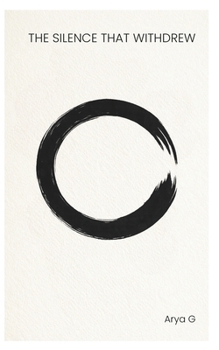
The Silence That Withdrew

When mercy becomes reliable, restraint begins to look cruel.
In a land where loss no longer shocks and survival itself feels accidental, people begin to ask a dangerous question:
If suffering can be prevented, why should it be allowed to continue?
A boy survives what should have killed him.
Not because he was chosen.
Not because he was worthy.
Because something refused to act.
That refusal marks him.
As the world quietly reorganizes itself around relief, intervention, and certainty, the boy learns that power does not always announce itself through force. Sometimes it appears as compassion. Sometimes as order. Sometimes as a promise that no one will have to endure uncertainty again.
What follows is not a battle between good and evil, but between freedom and relief, choice and protection, restraint and mercy that demands obedience.
The miracles work.
That is the problem.
As the world embraces a system that saves lives by deciding which ones matter, refusal becomes an act of discipline, not weakness. And discipline has consequences.
This is a philosophical novel set in a myth-touched world where relics do not grant power freely, heroes do not rise cleanly, and the most dangerous figures are the ones who are often right.
This book is for readers who enjoy:
morally complex stories without clear heroes or villains
quiet, unsettling fantasy rooted in human choice rather than spectacle
philosophical tension explored through action, not lectures
narratives where certainty is more frightening than chaos
Because when people are exhausted, they stop asking for freedom.
They ask for relief.
And someone always decides the price.
Customer Reviews
ThriftBooks ® and the ThriftBooks ® logo are registered trademarks of Thrift Books Global, LLC
