


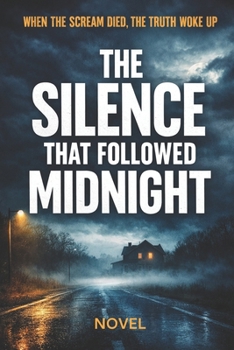
The Silence That Followed Midnight: When the scream died, the truth woke up.

The Silence That Followed Midnight looks at what remains after the clock strikes, after the speeches end, and after the moment everyone was watching has passed. It is not interested in the drama of the event itself, but in what comes next. The book argues that lives and histories are shaped less by the breaking moment and more by the quiet hours that follow, when attention fades, words lose their force, and people must live with consequences they never fully imagined.
In this book, midnight is not just a time. It is a crossing point. And silence is not peace or emptiness, but a weight that brings hidden truths to the surface. When the noise stops, certainty weakens, and what was once avoided becomes impossible to ignore.
Through short reflections, cultural observations, and close looks at modern life's obsession with announcements, endings, and public moments, the narrative explores how silence reshapes memory, shifts responsibility, and redistributes power in subtle ways. It shows how real change often begins only after the applause ends, the headlines move on, and people are left alone with their choices, searching for meaning without guidance, validation, or escape.
Customer Reviews
ThriftBooks® and the ThriftBooks® logo are registered trademarks of Thrift Books Global, LLC
