


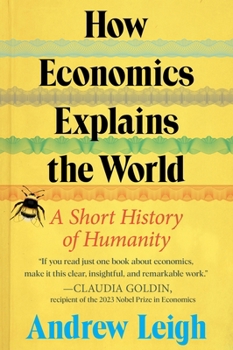
How Economics Explains the World: A Short History of Humanity
(Part of the Shortest History Series)

Select Format
Select Condition 
Book Overview
"If you read just one book about economics, make it Andrew Leigh's clear, insightful, and remarkable (and short) work." --Claudia Goldin, recipient of the 2023 Nobel Prize in Economics and Henry Lee Professor of Economics at Harvard University
A sweeping, engrossing history of how economic forces have shaped the world--all in under 200 pages
One of The Economist's Best Books of the Year
In How Economics Explains the World, Harvard-trained economist Andrew Leigh presents a new way to understand the human story. From the dawn of agriculture to AI, here is story of how ingenuity, greed, and desire for betterment have, to an astonishing degree, determined our past, present, and future.
This small book indeed tells a big story. It is the story of capitalism - of how our market system developed. It is the story of the discipline of economics, and some of the key figures who formed it. And it is the story of how economic forces have shaped world history. Why didn't Africa colonize Europe instead of the other way around? What happened when countries erected trade and immigration barriers in the 1930s? Why did the Allies win World War II? Why did inequality in many advanced countries fall during the 1950s and 1960s? How did property rights drive China's growth surge in the 1980s? How does climate change threaten our future prosperity? You'll find answers to these questions and more in this essential work of economic history.
"Can a short book survey the full history of something so vast and remain readable? To find out, read How Economics Explains the World, by Andrew Leigh. In simple, clear language--and less than 200 pages--it does exactly what its title promises. ... Leigh canters through the history of human progress, pausing briefly to explain the economic forces and ideas that drove it forward. ... Along the way, readers meet the big economic thinkers who sought to explain these forces. Both finance aficionados and mere novices will read, savour and return to this book." -The Economist, "The Best New Books to Read about Finance"
Leigh connects the dots from ancient history to modern dilemmas, revealing the economic principles that explain our world.
Global Economics: Understand the development of our market system and answer provocative questions, like why Europe colonized Africa and not the other way around.Historical Forces: Discover the economic underpinnings of major world events, including the real reasons the Allies won World War II.Inequality and Growth: Uncover the surprising link between property rights and China's economic surge, and investigate the forces that shape wealth distribution.Future Prosperity: Confront the most pressing modern challenge as Leigh explains how climate change threatens our shared economic future.Customer Reviews
ThriftBooks ® and the ThriftBooks ® logo are registered trademarks of Thrift Books Global, LLC
