


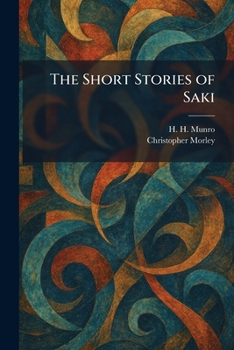
The Short Stories of Saki

"The Short Stories of Saki" is a comprehensive collection of the masterfully crafted and biting tales of H. H. Munro, better known by the pseudonym Saki. Renowned for his razor-sharp wit and Edwardian social commentary, Munro's stories offer a unique blend of humor, irony, and the macabre. This volume brings together the diverse range of his work, showcasing his ability to skewer the pretension and rigidity of early 20th-century British society.
Readers will encounter iconic characters and settings that range from the drawing rooms of the upper class to the untamed wilderness of the English countryside. Saki's narratives often feature mischievous children, supernatural interventions, and the unexpected cruelty of nature, all delivered with a sophisticated prose style that remains remarkably modern. His stories, such as "The Open Window" and "Sredni Vashtar," continue to captivate audiences with their clever twists and psychological depth. This collection, which includes an introduction by editor Christopher Morley, serves as a definitive look at the legacy of a writer whose influence on the short story genre remains profound. It is an essential read for those who appreciate literary satire and the art of the concise, impactful narrative.
This work has been selected by scholars as being culturally important, and is part of the knowledge base of civilization as we know it. This work was reproduced from the original artifact, and remains as true to the original work as possible. Therefore, you may see the original copyright references, library stamps (as most of these works have been housed in our most important libraries around the world), and other notations in the work.
This work is in the public domain in the United States of America, and possibly other nations. Within the United States, you may freely copy and distribute this work, as no entity (individual or corporate) has a copyright on the body of the work.
As a reproduction of a historical artifact, this work may contain missing or blurred pages, poor pictures, errant marks, etc. Scholars believe, and we concur, that this work is important enough to be preserved, reproduced, and made generally available to the public. We appreciate your support of the preservation process, and thank you for being an important part of keeping this knowledge alive and relevant.
Customer Reviews
ThriftBooks ® and the ThriftBooks ® logo are registered trademarks of Thrift Books Global, LLC
