


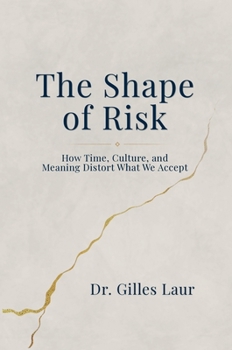
The Shape of Risk

This book examines a defining paradox of modern life: despite unprecedented gains in safety, longevity, and technological control over uncertainty, contemporary societies have become
less tolerant of risk and more anxious about its residual presence. It argues that risk has not disappeared but transformed-from an accepted condition of survival in earlier eras into a
moralised and politicised phenomenon shaped by expectations of preventability, institutional responsibility, and technological promise.
Rather than treating risk as a purely statistical problem, the book reframes it as a cultural, ethical, and psychological construct embedded in relationships between individuals,
institutions, and generations. It explores how social media amplifies rare harms, how modern medicine struggles to reconcile autonomy with genuine understanding, and how the shift
from inevitability to expectation has reshaped public responses to uncertainty, error, and suffering. Across domains such as healthcare, finance, law, and public policy, it shows how
the demand for perfect safety erodes resilience and distorts judgment. Ultimately, the book calls for a restoration of meaning to risk-not by rejecting science or
progress, but by recognising that uncertainty is inseparable from human life. It asks how societies can live responsibly with vulnerability in an age that promises control yet cannot
eliminate unpredictability.
Customer Reviews
ThriftBooks ® and the ThriftBooks ® logo are registered trademarks of Thrift Books Global, LLC
