


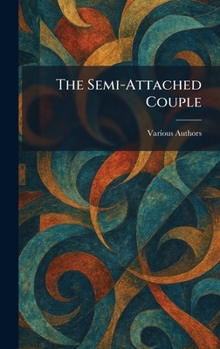
The Semi-Attached Couple

"The Semi-Attached Couple" is a sophisticated social satire that explores the complexities of early nineteenth-century marriage and high-society manners. Often compared to the works of Jane Austen, this novel provides a witty and perceptive look at the challenges faced by Helen Beaufort and Lord Teviot as they navigate the first months of their union. Their relationship, initially marked by misunderstandings and the pressures of their aristocratic circle, serves as a backdrop for a broader commentary on the expectations placed upon couples in English society.
The narrative is rich with colorful characters, including meddling relatives and ambitious social climbers, all rendered with a sharp sense of humor and keen observation. As the couple moves through various country houses and London salons, the work delves into themes of jealousy, pride, and the slow growth of genuine affection. "The Semi-Attached Couple" remains a celebrated example of the comedy of manners, offering readers an engaging portrayal of the domestic and social landscapes of its time. Its focus on the emotional nuances of partnership and the influence of public opinion makes it a timeless exploration of human relationships and the art of living together.
This work has been selected by scholars as being culturally important, and is part of the knowledge base of civilization as we know it. This work was reproduced from the original artifact, and remains as true to the original work as possible. Therefore, you may see the original copyright references, library stamps (as most of these works have been housed in our most important libraries around the world), and other notations in the work.
This work is in the public domain in the United States of America, and possibly other nations. Within the United States, you may freely copy and distribute this work, as no entity (individual or corporate) has a copyright on the body of the work.
As a reproduction of a historical artifact, this work may contain missing or blurred pages, poor pictures, errant marks, etc. Scholars believe, and we concur, that this work is important enough to be preserved, reproduced, and made generally available to the public. We appreciate your support of the preservation process, and thank you for being an important part of keeping this knowledge alive and relevant.
Customer Reviews
ThriftBooks ® and the ThriftBooks ® logo are registered trademarks of Thrift Books Global, LLC
