


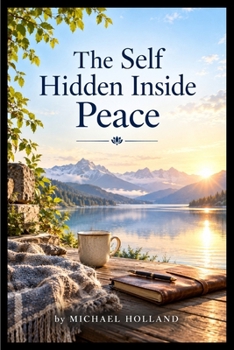
The Self Hidden Inside Peace

The Self Hidden Inside Peace follows Nathaniel Cross, a monk at Oakhaven Priory whose reputation for perfect composure has become the foundation of his identity. For twenty years he has disciplined his body, anger, speech, posture, and reactions until he believes he has buried the unstable man he once was. He treats cold as a test, discomfort as weakness, and the emotional agitation of other monks as proof that they remain prisoners of impulse. His calm is admired because it appears complete and almost inhuman.That image begins to fracture when ordinary life refuses to respect his discipline. A novice's accident exposes Nathaniel to sudden pain, humiliation, and physical vulnerability. He discovers that his serenity is not only peace; it is also control, judgment, pride, and fear of becoming the angry man he once buried. The harder he tries to preserve the image of the serene monk, the clearer the tension beneath it becomes. His discipline has produced a polished surface, but the surface depends upon constant resistance.As the story continues, Nathaniel is forced into situations where he cannot maintain perfect command of his body or reputation. His brothers see him frightened, exhausted, irritated, and imperfect. Physical suffering and emotional shock make his old methods increasingly difficult to sustain. He begins to confront the difference between suppressing a reaction and being free from it. Anger, discomfort, embarrassment, and fatigue do not have to be enemies for him to live with them.The monastery becomes a testing ground for this realization. People whose ordinary messiness once offended Nathaniel's ideal of discipline begin to reveal a freedom he lacks. Their laughter, mistakes, complaints, and simple work are not treated as failures to transcend life. They are part of life. His relationship to silence changes too. Silence is no longer valuable because it proves that he can control himself; it becomes valuable when he no longer needs it to confirm who he thinks he is.The title expresses the central paradox. Nathaniel has searched for peace by constructing a perfected self and defending it from disturbance. When that construction begins to fall apart, what remains is not a grand spiritual identity but a more ordinary human presence. He can feel cold without making coldness an enemy, experience anger without becoming its servant, and suffer embarrassment without restoring his image. The final movement gives him no spectacular victory. After the wind scatters work he has already completed, Nathaniel stands in the monastery courtyard with a broom. He can retreat into the old performance of perfect serenity or simply accept the mess and begin again. He chooses the ordinary work. His response is imperfect, honest, and unforced.
Customer Reviews
ThriftBooks ® and the ThriftBooks ® logo are registered trademarks of Thrift Books Global, LLC
