


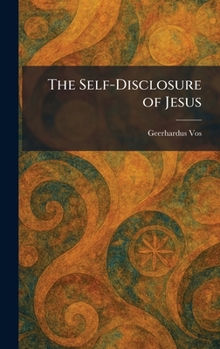
The Self-Disclosure of Jesus

"The Self-Disclosure of Jesus" is a profound theological exploration of the messianic consciousness of Jesus Christ as presented in the New Testament. Written by Geerhardus Vos, a foundational figure in the field of biblical theology, this work meticulously examines the ways in which Jesus understood and revealed His own identity, office, and mission. Vos delves into the historical and scriptural evidence regarding the self-designations of Jesus, such as "Son of Man" and "Son of God," providing a rigorous defense of the supernatural character of Christ's self-awareness against the skeptical trends of historical criticism.
The book is structured to guide the reader through the various layers of Jesus's public and private teaching, highlighting the organic development of His revelation. Vos emphasizes that Jesus's messianic claim was not an afterthought or an external title imposed by later tradition, but was central to His entire ministry and life. By focusing on the inner life and self-expression of the Savior, "The Self-Disclosure of Jesus" offers readers a deep look into the heart of Christology and the theological unity of the Gospels. This work remains an essential resource for students of theology, biblical scholars, and anyone seeking a deeper understanding of the biblical foundations of the Christian faith.
This work has been selected by scholars as being culturally important, and is part of the knowledge base of civilization as we know it. This work was reproduced from the original artifact, and remains as true to the original work as possible. Therefore, you may see the original copyright references, library stamps (as most of these works have been housed in our most important libraries around the world), and other notations in the work.
This work is in the public domain in the United States of America, and possibly other nations. Within the United States, you may freely copy and distribute this work, as no entity (individual or corporate) has a copyright on the body of the work.
As a reproduction of a historical artifact, this work may contain missing or blurred pages, poor pictures, errant marks, etc. Scholars believe, and we concur, that this work is important enough to be preserved, reproduced, and made generally available to the public. We appreciate your support of the preservation process, and thank you for being an important part of keeping this knowledge alive and relevant.
Customer Reviews
ThriftBooks ® and the ThriftBooks ® logo are registered trademarks of Thrift Books Global, LLC
