


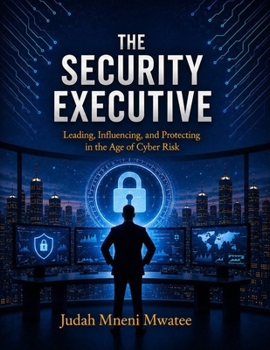
The Security Executive

The Security Executive: Leading, Influencing, and Protecting in the Age of Cyber Risk is the definitive career and leadership guide for security professionals who have mastered the technical dimensions of cybersecurity and are ready to master the organizational ones.
Most security leaders reach the CISO level on the strength of their technical competence - and then discover that technical competence is not what the role most requires. The board does not need another expert. It needs a governance partner. The CFO does not need a threat briefing. They need a risk quantification they can act on. The CEO does not need a security report. They need a trusted advisor who understands both the threat landscape and the business it threatens.
The Security Executive was written for the gap between technical excellence and organizational leadership - the gap that ends careers prematurely, produces underfunded security programs, and leaves organizations exposed not because their security teams lacked skill, but because their security leaders lacked the organizational fluency to translate that skill into investment, governance, and culture.
What This Book Covers
Organized across six parts and twenty chapters, The Security Executive provides a complete leadership architecture for the modern CISO:
Part One: Foundations - The identity shift from engineer to executive, the modern CISO's true organizational role, and a proven 90-day entry framework that builds the organizational relationships security leadership requires.
Part Two: Strategy - How to build a security strategy the business actually believes in, speak the language of risk that the C-suite uses, design resilient security architectures, lead with threat intelligence, and communicate a multi-year security roadmap that survives annual budget cycles.
Part Three: People and Culture - Building and leading high-performance security teams, developing the next generation of security leaders, and creating a genuine security culture across the enterprise - not compliance performance, but behavioral ownership.
Part Four: Influence and Communication - How to speak to the board in governance language rather than security language, build the C-suite alliances that determine whether security is included in strategic decisions before they are made, and manage the vendor and partner ecosystem that modern security programs depend on.
Part Five: Crisis and Resilience - Incident response leadership in the first 24 hours, crisis communication that maintains organizational trust while the investigation is incomplete, and organizational resilience that converts every disruption into capability development rather than recovery alone.
Part Six: The Future - AI and automation adoption that genuinely improves security outcomes, the regulatory landscape that has made CISO accountability personal as well as professional, and career architecture that builds professional longevity, legacy, and the options that intentional design creates.
Who This Book Is ForExperienced security leaders who have been in the CISO role and want a comprehensive framework for the organizational dimensions of the workAspiring CISOs preparing for their first CISO role and looking to understand what the role actually requires versus what the job description describesSecurity managers and directors developing toward senior leadership and wanting the strategic and organizational knowledge that their current role does not yet demandBoard members and executives responsible for security governance who want to understand what effective CISO leadership looks like and what governance structures it requires
Customer Reviews
ThriftBooks ® and the ThriftBooks ® logo are registered trademarks of Thrift Books Global, LLC
