



Select Format
Select Condition 
Book Overview
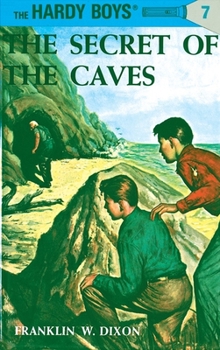
Triggered by the disappearance of a brilliant young professor, this mystery takes the Hardy boys first to Kenworthy College, where they find a puzzling message on an examination paper. But then, a new clue is unearthed that sends the young detectives to the Honeycomb Caves. After many dangerous encounters, Frank and Joe discover a powerful searchlight in one of the craggy caverns along the seacoast. In the brilliant white glare of the searchlight, the startling secret of the caves is dramatically revealed.
Format:Hardcover
Language:English
ISBN:0448089076
ISBN13:9780448089072
Release Date:May 1929
Publisher:Grosset & Dunlap
Length:192 Pages
Weight:0.58 lbs.
Dimensions:0.7" x 5.0" x 7.6"
Age Range:8 to 12 years
Grade Range:Grades 3 to 7
Customer Reviews
5 ratings
My Hardy Boys #7 Review
Published by Thriftbooks.com User , 24 years ago
I think this book is a great read for everybody, young and old.I especially liked the part where they meet the retired sea captain in the cave,and at first he is cool with Chet, Biff, Joe and Frank, then they return and he gets all aggressive with them.To sum it up, this book, The Secret Of The Caves is an awesome book.Go read it!
The Secret Of The Caves
Published by Thriftbooks.com User , 25 years ago
I really like this book because I love to go exploring, I like caves, and cave mysteries are great! This was the 7th book I read and it's book number 7! I was really surprised about that! In the book, there were lots of storms, and I like camping in caves when there are storms. I recommend that you read this book for total mystery and action.
Wow
Published by Thriftbooks.com User , 26 years ago
I liked it. I enjoyed when they're driving to Kennyworth and a trailer with a crane on it almosts hits them. I also enjoyed it when a bunch of college kids put them on the train tracks that got my addrainlan going. Good book.
GREAT BOOK
Published by Thriftbooks.com User , 26 years ago
The Hardy Boys are at it again, and going into caves is no place to fool around as they will find out. I couldn't put it down. I love books about adventure in caves. Another book about underground adventure I recommend is, Steward's "Tales, of Dirt, Danger, and Darkness."
The Secret of the Caves
Published by Thriftbooks.com User , 27 years ago
I think Secret of the caves was the best book I ever read from the Hardy Boys Collection! It was so good I read it in one day! So if i were you I would get the Secret of the Caves right away!
Copyright © 2026 Thriftbooks.com
Terms of Use | Privacy Policy | Do Not Sell/Share My Personal Information | Cookie Policy | Cookie Preferences | Accessibility Statement
ThriftBooks ® and the ThriftBooks ® logo are registered trademarks of Thrift Books Global, LLC
ThriftBooks ® and the ThriftBooks ® logo are registered trademarks of Thrift Books Global, LLC
