


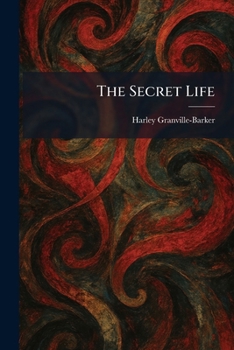
The Secret Life

"The Secret Life" is a profound and introspective three-act play by the influential dramatist Harley Granville-Barker. Written in the aftermath of the First World War, the work examines the internal conflicts of individuals navigating the shifting landscapes of British politics and social structure. The narrative centers on Evan Strowde, a former politician whose potential re-emergence into the public sphere forces a confrontation with his past and the "secret life" of his private aspirations and unfulfilled longings.
Granville-Barker masterfully captures the intellectual and emotional disillusionment of an era, moving away from conventional dramatic structures toward a more nuanced, realistic portrayal of the human psyche. The play delves into themes of sacrifice, the weight of tradition, and the search for spiritual or personal meaning in a world scarred by global conflict. Through its sophisticated dialogue and complex character studies, "The Secret Life" remains a significant exploration of the tension between public duty and personal integrity. It stands as a testament to Barker's mastery of the stage and his deep understanding of the sociopolitical tensions of the early 20th century.
This work has been selected by scholars as being culturally important, and is part of the knowledge base of civilization as we know it. This work was reproduced from the original artifact, and remains as true to the original work as possible. Therefore, you may see the original copyright references, library stamps (as most of these works have been housed in our most important libraries around the world), and other notations in the work.
This work is in the public domain in the United States of America, and possibly other nations. Within the United States, you may freely copy and distribute this work, as no entity (individual or corporate) has a copyright on the body of the work.
As a reproduction of a historical artifact, this work may contain missing or blurred pages, poor pictures, errant marks, etc. Scholars believe, and we concur, that this work is important enough to be preserved, reproduced, and made generally available to the public. We appreciate your support of the preservation process, and thank you for being an important part of keeping this knowledge alive and relevant.
Related Subjects
DramaCustomer Reviews
ThriftBooks ® and the ThriftBooks ® logo are registered trademarks of Thrift Books Global, LLC
