


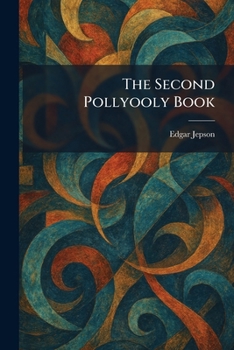
The Second Pollyooly Book

"The Second Pollyooly Book" continues the delightful and witty adventures of Mary Bridger, the precocious and resourceful young girl affectionately known as Pollyooly. Living in the heart of London, Pollyooly manages a household with a level of maturity far beyond her years, all while caring for her baby brother, the "Lump." As the housekeeper for the Honorable John Ruffin, she finds herself at the center of various social comedies, misunderstandings, and lighthearted mysteries.
Written by Edgar Jepson, this charming work captures the essence of early 20th-century life with a sharp eye for character and a gentle sense of humor. Pollyooly's angelic appearance often masks a shrewd and determined mind, allowing her to navigate the complexities of adult society with surprising success. From her efforts to secure her brother's future to her inadvertent involvement in the romantic and financial affairs of the London elite, the narrative remains engaging and spirited.
"The Second Pollyooly Book" is a classic example of early 20th-century fiction that celebrates the ingenuity of its young protagonist. It offers readers a nostalgic glimpse into a bygone era, filled with warmth, clever dialogue, and the enduring charm of one of literature's most memorable young heroines.
This work has been selected by scholars as being culturally important, and is part of the knowledge base of civilization as we know it. This work was reproduced from the original artifact, and remains as true to the original work as possible. Therefore, you may see the original copyright references, library stamps (as most of these works have been housed in our most important libraries around the world), and other notations in the work.
This work is in the public domain in the United States of America, and possibly other nations. Within the United States, you may freely copy and distribute this work, as no entity (individual or corporate) has a copyright on the body of the work.
As a reproduction of a historical artifact, this work may contain missing or blurred pages, poor pictures, errant marks, etc. Scholars believe, and we concur, that this work is important enough to be preserved, reproduced, and made generally available to the public. We appreciate your support of the preservation process, and thank you for being an important part of keeping this knowledge alive and relevant.
Customer Reviews
ThriftBooks ® and the ThriftBooks ® logo are registered trademarks of Thrift Books Global, LLC
